The decision of approaching the problem of indigenous representation specifically in the Philippines has been a result of both my desire to connect with my Filipino culture, and my desire to confront my conflicting feelings towards colonization the colonization of my nation. As a diasporic Fil-am that immigrated from the Philippines at a young age, I have experienced not only a sense of distance from my original culture, but also a conflict of identity in understanding what it means to be Filipino in the face of coming to terms with the nature of the nation’s long history of colonization.
As an individual, I have always been passionate above amplifying the voices of marginalized communities here and America, and believed that my penchant for design meant to impact social change could be utilized for indigenous communities in my home country, allowing me both the ability to address the problems of marginalized communities and connect with the culture of a nation I have been largely isolated from since moving to America.
The goal of the project is to understand the needs of Indigenous Filipino communities, learning to understand and interpret indigenous narratives in order to allow them to connect to larger audiences.
THE
PROBLEM
AREA
While today, the Philippines is a prideful country, often boasting it’s strong pride in the Filipino culture and “pinoy” excellence on various international stages, this pride is often hypocritically steeped in a long cultivated colonial mentality, characterized by a preference for western cultural practices and a tendency to erase the injustices inflicted upon the Filipino people by their western colonizers. The damages of this phenomena exist in many aspects of Filipino society, but none more prevalent than the erasure of and negligence towards indigenous Filipino communities and their culture, especially in the realm of Filipino art and design.
Due to the history of violent cultural genocide in the Philippines, modern day Filipino design practices tend to reflect the methods of its western oppressors rather than taking influence from their indigenous and native cultures, contributing to the deterioration of cultural preservation within the country and the growing negligence of indigenous communities. In order to resolve this problem of the erasure of indigenous culture in Filipino art and design, the introduction of new modern design brands that utilize indigenous art styles and practices would increase awareness of the culture, directing Filipino design in the direction of a more uniquely Filipino style and deteriorating the colonial mentality that ties the Philippines so closely to their past oppressors.
THE QUESTION
How can brand design be used to amplify indigenous voices in the Filipino fashion industry?
A history of over 500 years of colonization and a continuing loyalty and dependence on the west has led to the erosion of indigenous visibility and presence in modern Filipino society. The legacy of the nation’s history of colonization and cultural genocide is present in the nation’s failure to properly address issues of indigenous representation and justice, and these communities are often faced with financial and social disadvantages. One of the ways in which indigenous Filipino communities are able to encourage awareness and obtain income is through the integration of their textiles in modern fashion design, but with competition from brands selling inauthentic indigenous weaves and large fashion giants from the west, there is much more work to be done to expand the platform for indigenous voices in the fashion sphere.
SOLUTION
My solution is to create a platform that increases indigenous visibility and amplifies their voices through the promotion of their fashion brands. Indigenous communities sell their products not only a source of income, but also a means of improving their visibility and demonstrating their agency, so promotion of the brands through materials such as magazines allows them to connect to wider audience, and serves as a gateway to further education on indigenous culture and activism.
The mission of this magazine is to improve representation of Indigenous Filipino communities, countering the historicization and erasure of Indigeneity in the nation.
PROJECT OVERVIEW
Vision
To create a more knowledgeable and socially conscious Filipino and global audience in order to encourage support of indigenous Filipino activism and indigenous fashion brands.
MISSION
The mission of this indigenous fashion and culture magazine is to create a platform to amplify indigenous voices and counter the harmful dominant narrative of indigenous historicization and erasure.
Values
Knowledge, diversity, inclusion, creativity and social responsibility. This magazine will value the balance of both excellence in the field of design, as well as social awareness and understanding of indigenous culture and activism.
Target Audience
While the magazine is mainly focussed on a Filipino audience, it also aims for a global audience so as to address the growing desire of indigenous brands to expand the scope of their businesses as well as reach diasporic Filipinos abroad. As such the magazine seeks to appeal to Filipino women in their 20s and 30s both in the Philippines and abroad with an interest in fashion.
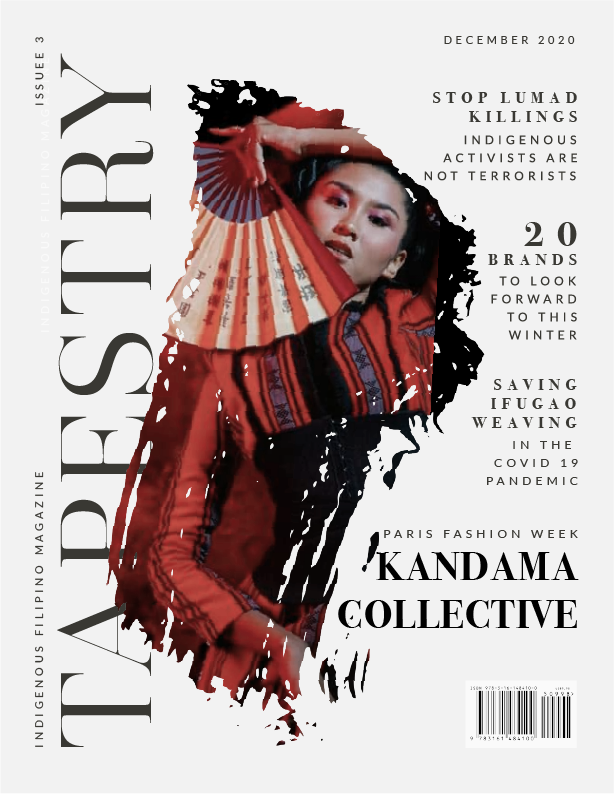
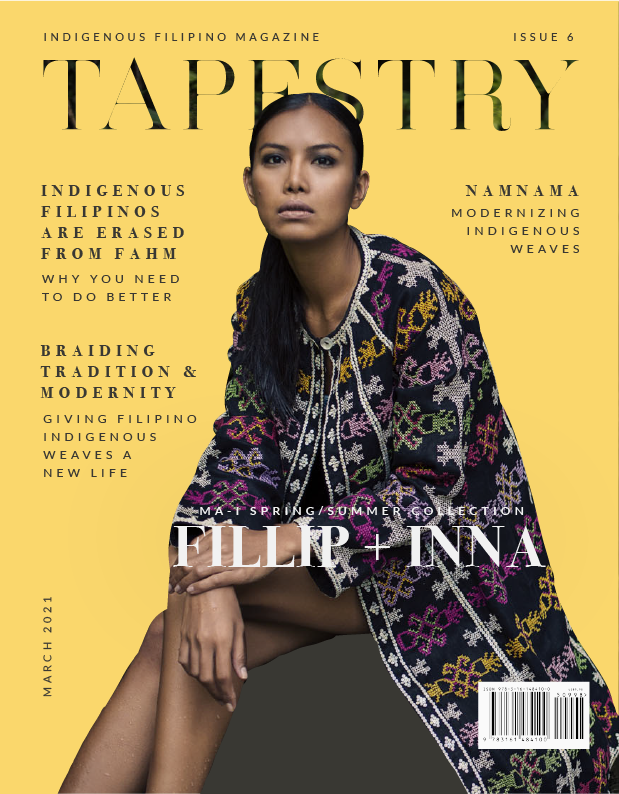
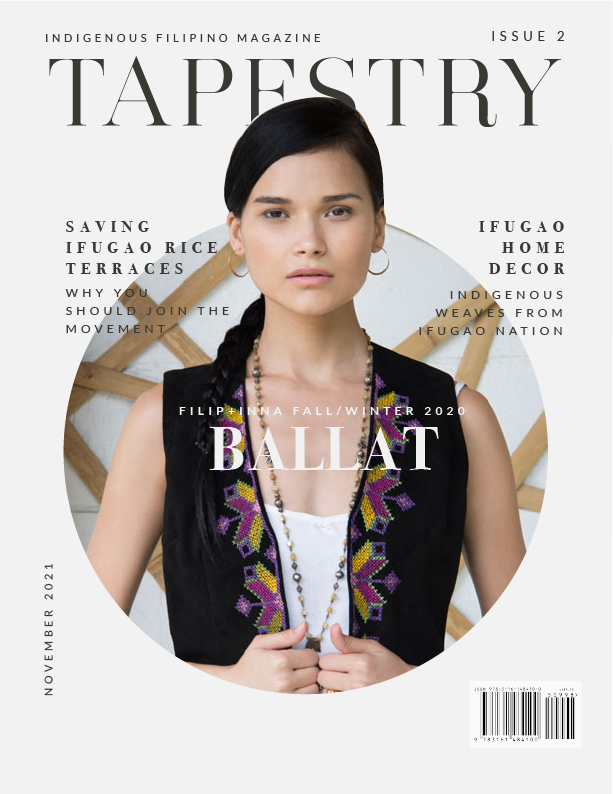
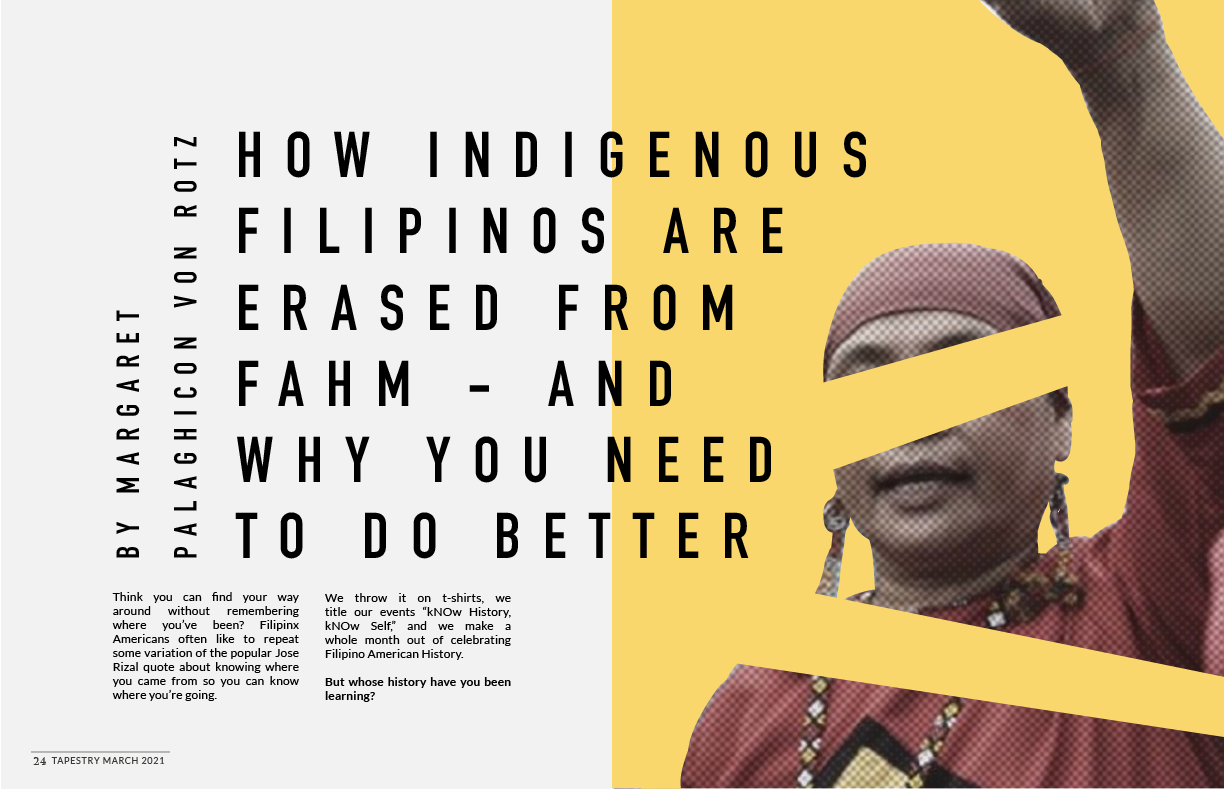
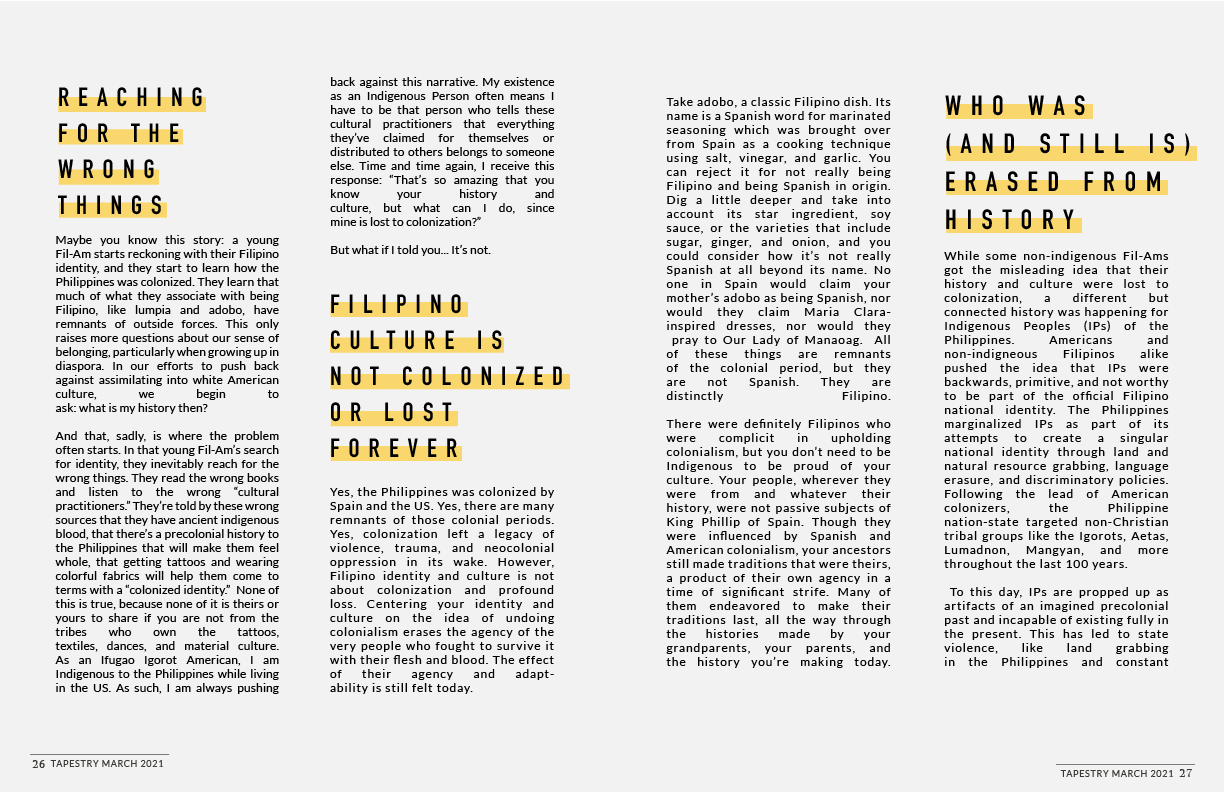
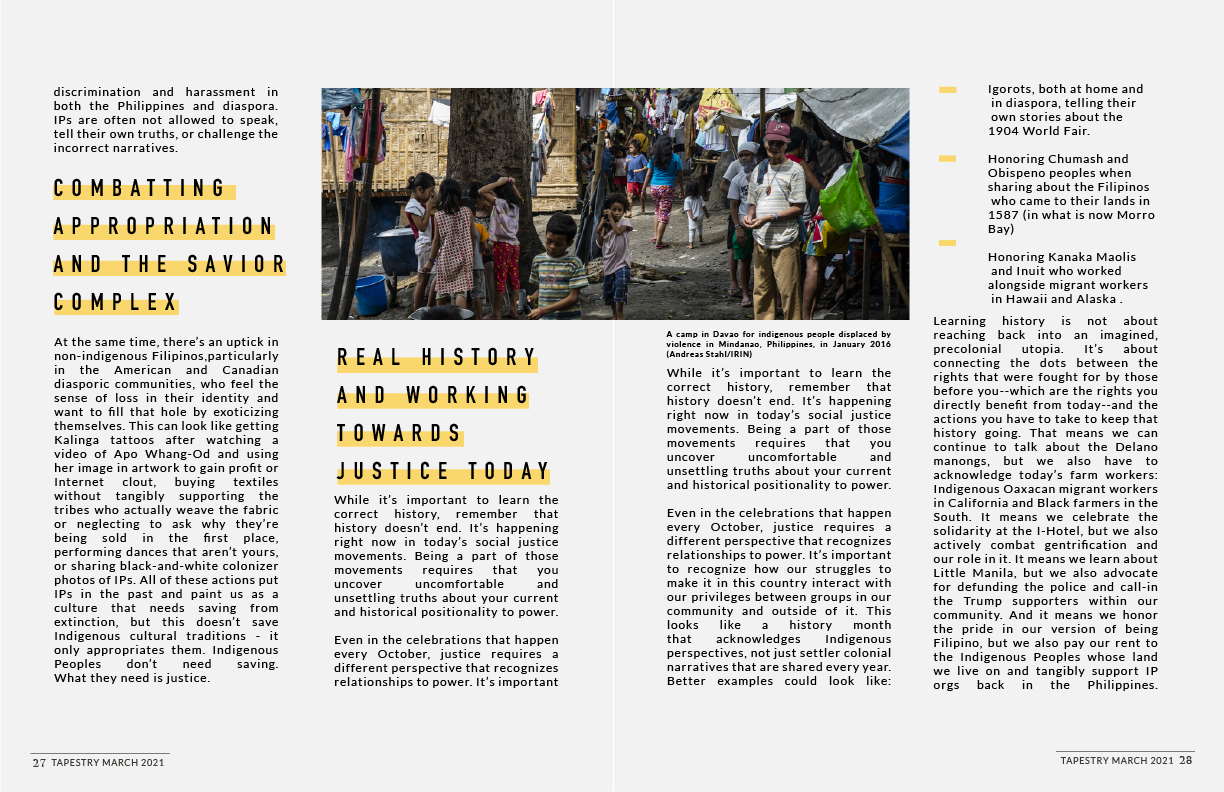
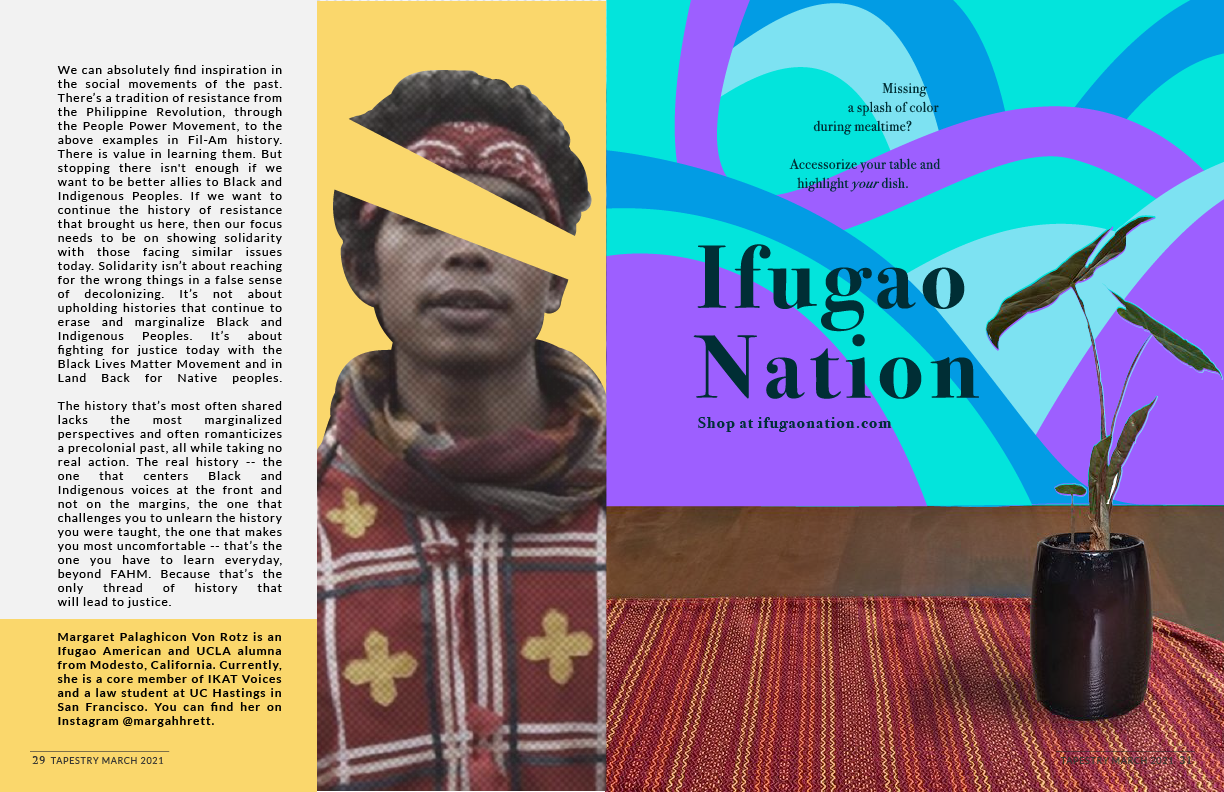
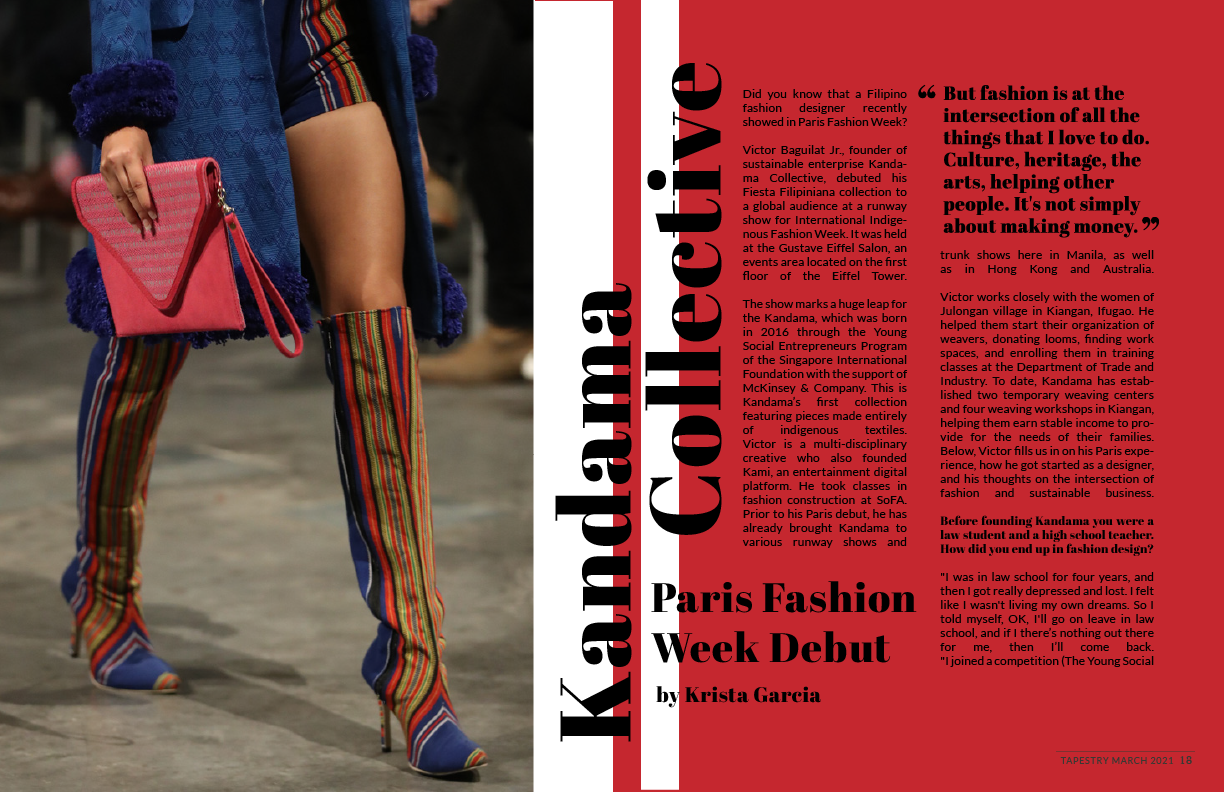
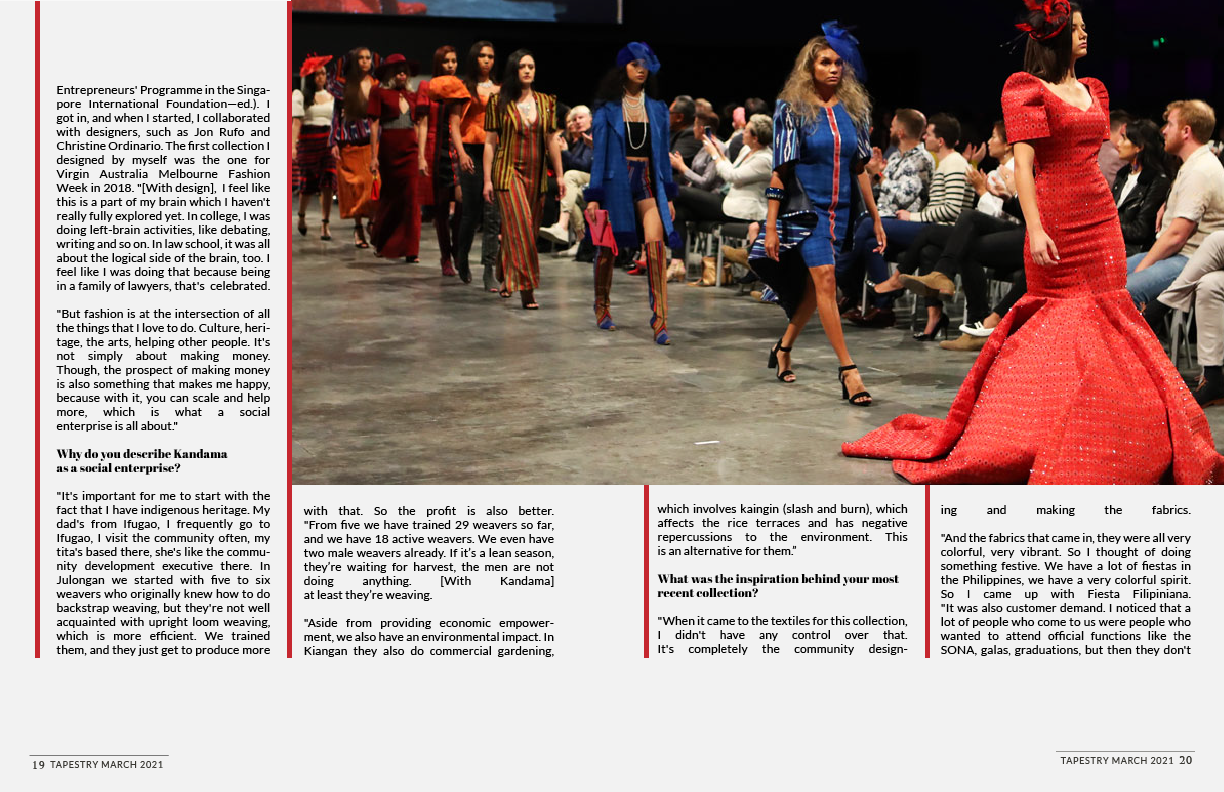
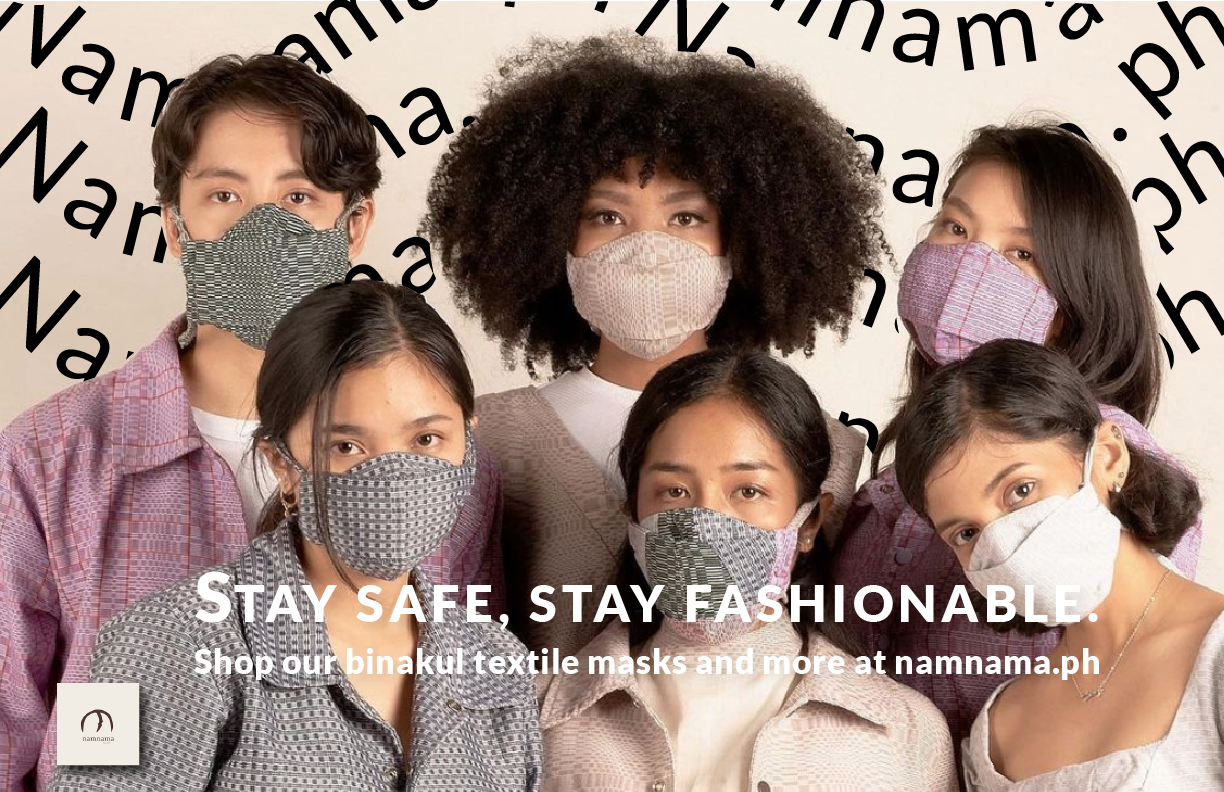
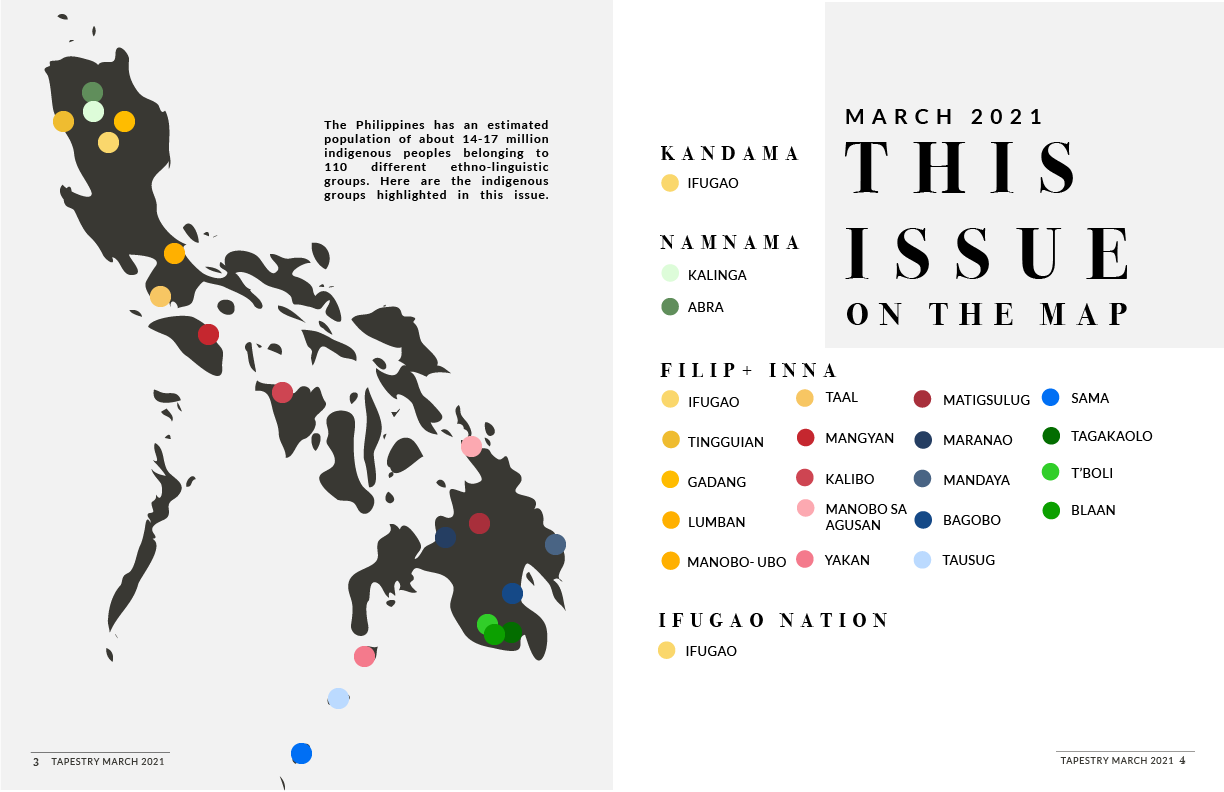
Images sourced from preview.ph, thenewhumanitarian.org, kandamaweave.com, namnama.ph, ifugaonation.com, and filipinna.com.
Articles sourced from one-down.com, preview.ph, shopcambio.com.