
Bringing easy and elevated fashion to a wider audience.
THE TEAM
OVERVIEW
TEAM SIZE
Three Members
DURATION
Five Weeks
METHODS
Competitive Analysis, Usability Testing, Proto-Personas, Sketching, Prototyping
Noelle Axalan
Website

THE NATTY APP
DESIGN OBJECTIVE
Fashion has always been an integral part of human expression and individuality. It is through fashion that many individuals are able to define their self image and personal identity, and it is due to this fact that fashion as an industry has become so essential to human interaction in this present day. And much like many other aspects of society are evolving and progressing in order to keep up with the rapidly advancing technologies being developed, as is the culture of fashion, evolving beyond the personal to become something of a social experience. With the rise of social media and the feminist movement, encouraging the collaboration of women and unity through shared interests such as fashion, the collaborative nature of fashion has come into light, the ability to cultivate styling skills becoming ever more accessible.
As such, it is clear there is a need for a product which allows for individuals with an interest in fashion to be able to collaborate with other, similar minded individuals, while also providing tools to implement the skills they acquire through collaboration, and translate their styling ideas into physical results.In order to effectively address this issue of social fashion, their needs to be a product that, rather than fostering creativity in an isolated environment, encourages growth and learning in fashion with a community.
PROJECT CONCEPT
Natty was created in order to solve this lack of ability to address the need for collaboration in the process of styling and learning about fashion. While Natty is a digital closet app, it offers a mutlitude of feature which other similar apps are unable to offer. While many other digital closet apps place an emphasis on organization and creation, they do little to cater to the need for inspiration and learning, making these apps unappealing for individuals that may not have a natural penchant for styling or experience with the world of fashion. Natty is able to counter these problems experienced with other digital closet apps, allowing individuals to not only organize their closets and create outfits, but to gain inspiration and learn from many other fashionable individuals through collaborative and social features such as a live streaming feature, allowing individuals to obtain real time feedback on their outifts and watch other live streams for inspiration, an outfit suggestions feature, which generates photos from the Natty database in order to suggest outfits that can be created with pieces from your own closet, and a social feed, which allows you to view outfits created by friends and other fashionable individuals you may be interested in following. The resulting application would be a merging of the traditional digital closet apps, with more social applications such as Pinterest in Instagram in order to create a convenient, fun, and educational styling experience. What differentiates the Natty app is its ability to bring the social aspect of fashion to its users, making elevated fashion more accessible to all individuals.
“A good outfit is a challenge best faced with preparedness and collaboration.”
USER RESEARCH THROUGH PROTOPERSONAS
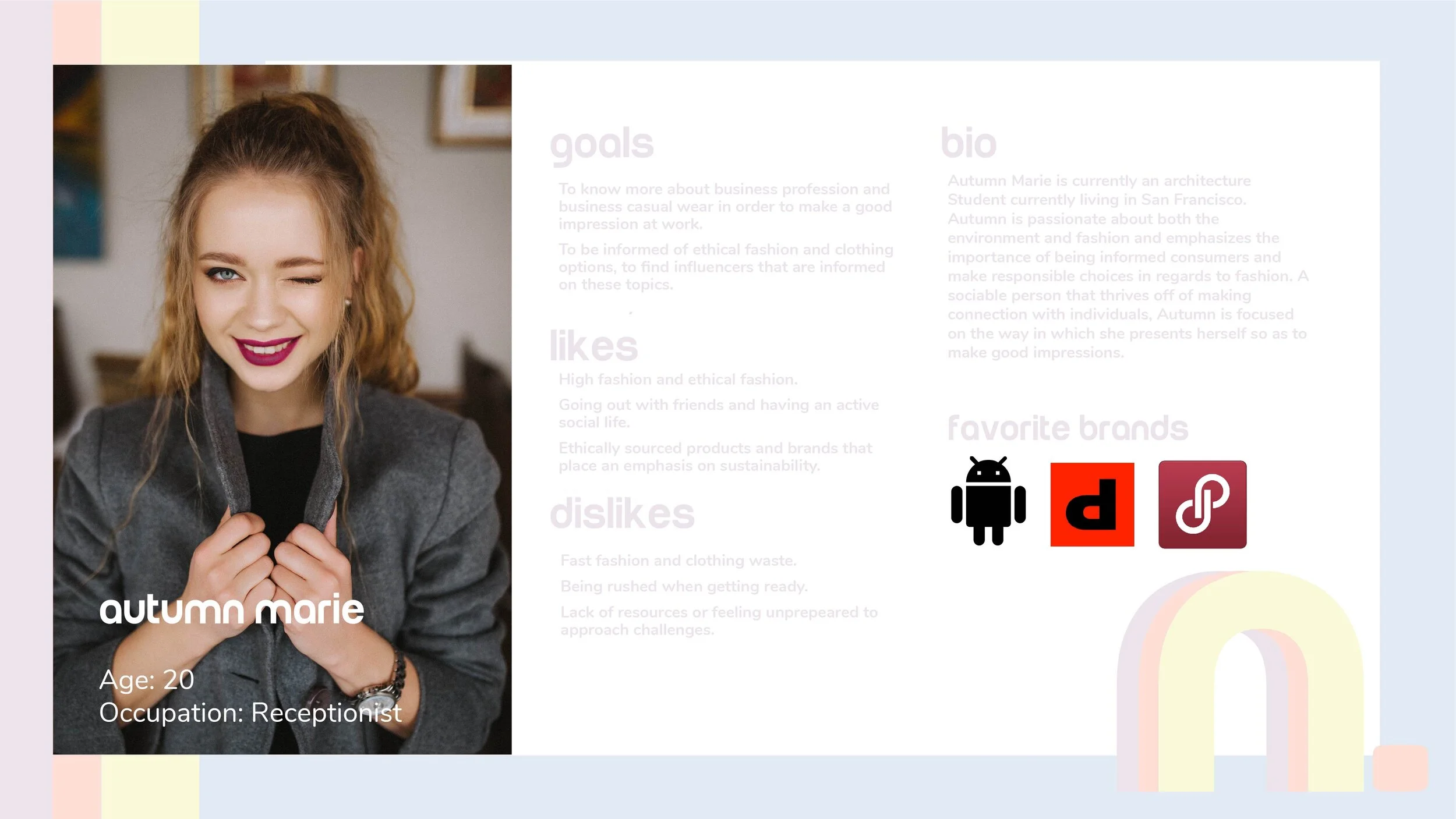
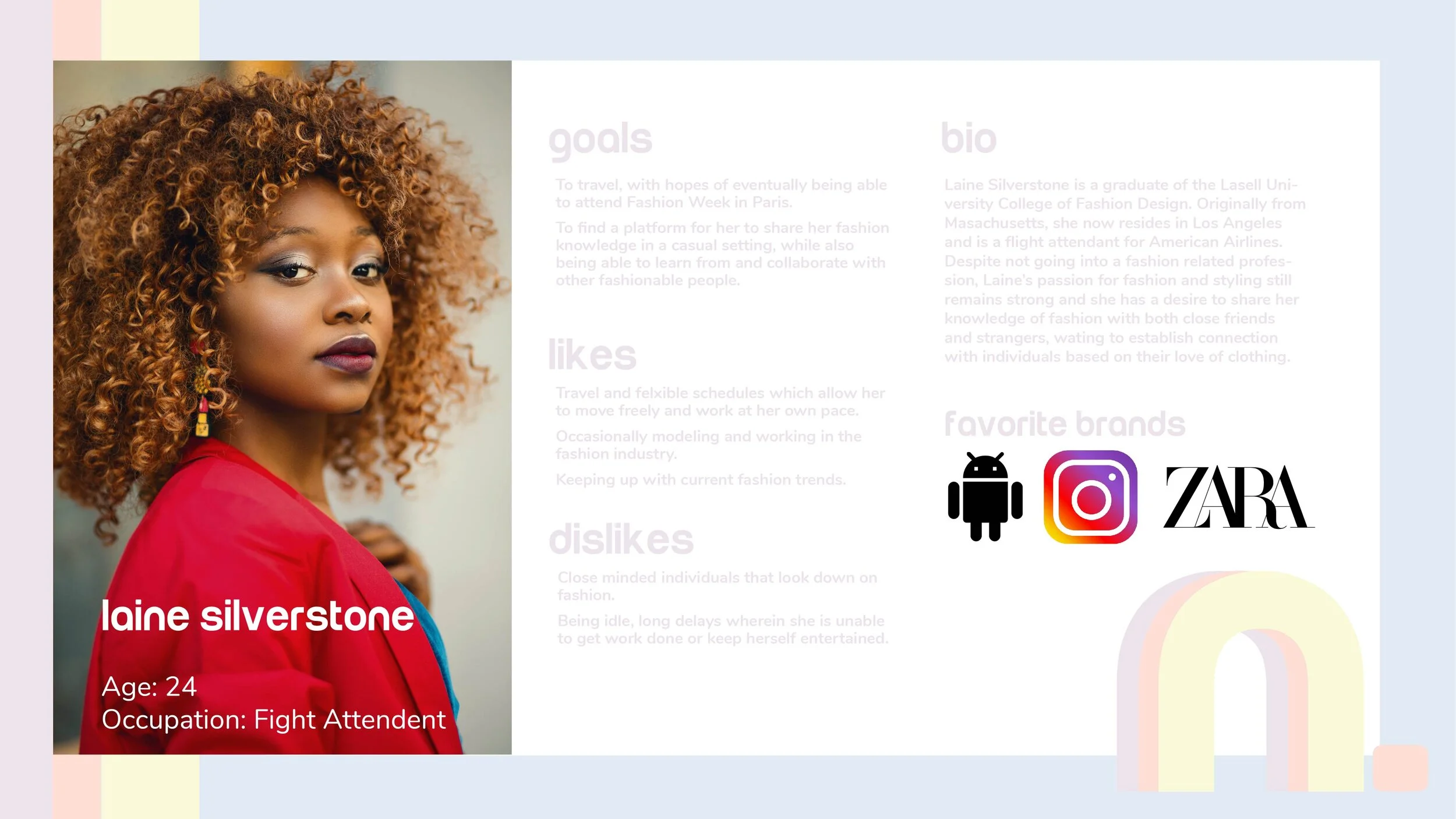
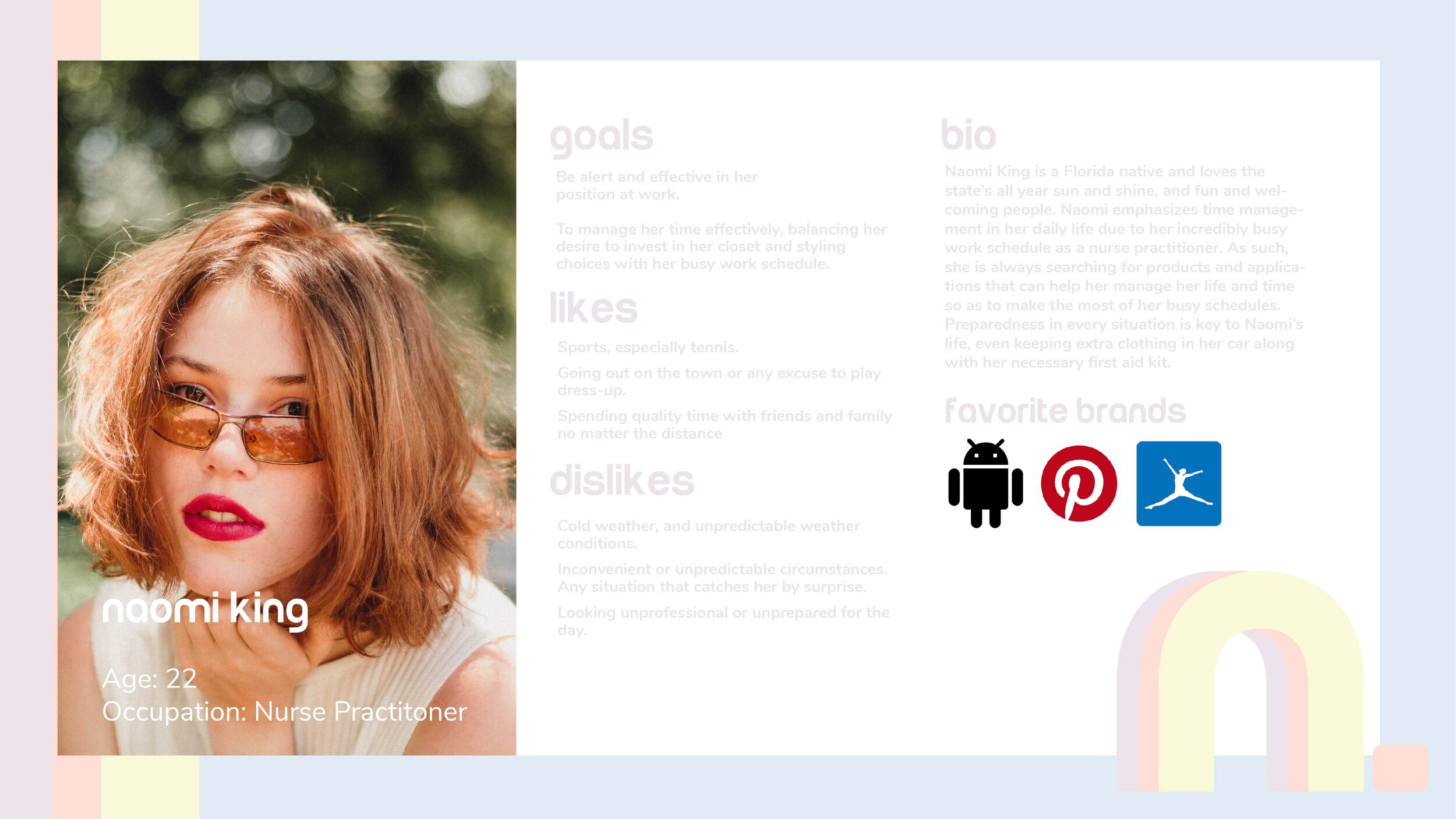
The first phase of our app development process involved thorough user research in order to better understand the audience for which we planned to design this app. ONce we had determined the general audience which our app would aim to cater to, we then began developing personas which would allow us to guide the direction of our app in order to better cater to the specific needs of these individuals and to avoid straying from these essential points. We created three protopersonas, each with a set of goals, likes and dislikes and a brief bio in order to gain a deeper insight into who this individual is and how they may interact with an app like this. All personas fell into our target age range of 18-30, were female, and had a specific interest in fashion or topics related to fashion. While as designers we were mainly concerned with our user’s interests in regards to fashion and their interaction with fashion related apps, our persona profiles also defined who theseusers were as individuals, as our applications goal was not to cater only to individuals that were only interested in fashion such as influencers, but rather to w wide audience of individuals who may be interested in learning more about fashion. As such, our users goals are related more to their concerns with time management and conveneience as it relates to their jobs outside of their interest in fashion.
USABILITY RESEARCH
After developing our screen design and creating our prototype, much of our time was devoted to usability testing in order to better understand our next steps and areas of improvement. Our team conducted usability testing over a span of two week, conducting three testing sessions, testing two participants during each session for a total of six participants. Participants were chosen based on the target audience demopgraphic we had established in our initial user research and were all females, aged 18-30. Each session lasted approximately 20 minutes, and were conducted by our team of designers, one individual recording the protype testing, one conducting the interview, and one acting as the data logger, taking note of all important information. Our participants were asked general information regarding their backgrounds in fashion and fashion application, were asked to complete three separate task using the Natty prototype, and were then asked a series of question regarding the effectiveness of the app as well as its positives and negatives. Through these sessions, our team was able to gather both qualitative and quanititative data reagrding the effectiveness and ease of using our app as well as areas in which we could improve the overall design. The following highlights speak to the most important insights we gained from this research.
The least successful aspect of our app could be seen in the difficulty for some of our users to find certain features such as the adding items button in the closet feature and the outfit suggestions based on weather under the fits feature. Failure to complete tasks was mostly attributed to the inability to locate certain features, and as such, the main priority in future iterations of this design would be to make navigation of the apps features more intuitive and navigable by individuals that may not be as tech savvy or have not used similar applications.
NAVIGATIONAL ERRORS ARE MAIN PRIORITY
Users reported most positively on these aspects of our design, believing they helped to separate the application from its competition. While the closet feature resembled closely other digital closet apps, none of the other competition provided collaborative features and therefore only focused on the organizational challenge of styling. Users felt that being able to get feedback on outfits through live streams provided them with reassurance on their styling choices, and felt they could benefit from being able to socialize and get advice from other fashionable users. As such, participants believe Natty should emphasize the social features of the application, and expand upon this area.
SOCIAL AND LIVE STREAMING ASPECTS DIFFERENTIATE
THE APP, EMPHASIZE THESE FEATURES
While several users did find difficulty in navigating certain tasks given to them, they did respond that the application had high potential for users to learn how to navigate it with some practice and instruction. As one of the screens demonstrates how to click and drag an item onto the outfit creation canvas (figure 8, attachment C), users found that small, non invasive popups that gave quick orienting advice would go a long way in making the app overall more navigable for its users without having to try many options before finally succeeding. Providing pop ups to orient the user, or a quick beginners tutorial would be beneficial according to three of the participants.
TUTORIALS ARE NECESSARY TO ORIENT THE USER
While the application’s live streaming does take inspiration from the Instagram live feature of Instagram, it places special emphasis on the ability to view and review chat logs in order to review fashion advice, commentary and opinions so as to make better decisions for your own styling choices. When this was explained to the participant, they felt this to be a strong aspect of the live stream design and believed it needed to be better emphasized and improved upon to reflect its importance as currently, it just appears as the typical Instagram live chat log. Features that the participants suggested should be added to reflect this importance included the saving of comments to later be reviewed, similar to how messages could be saved in Snapchat Conversations.
MORE WORK NEEDS TO BE DONE ON THE CHAT FEATURE
PROTOTYPING AND SCREEN DESIGNS
MOBILE SCREEN DESIGNS
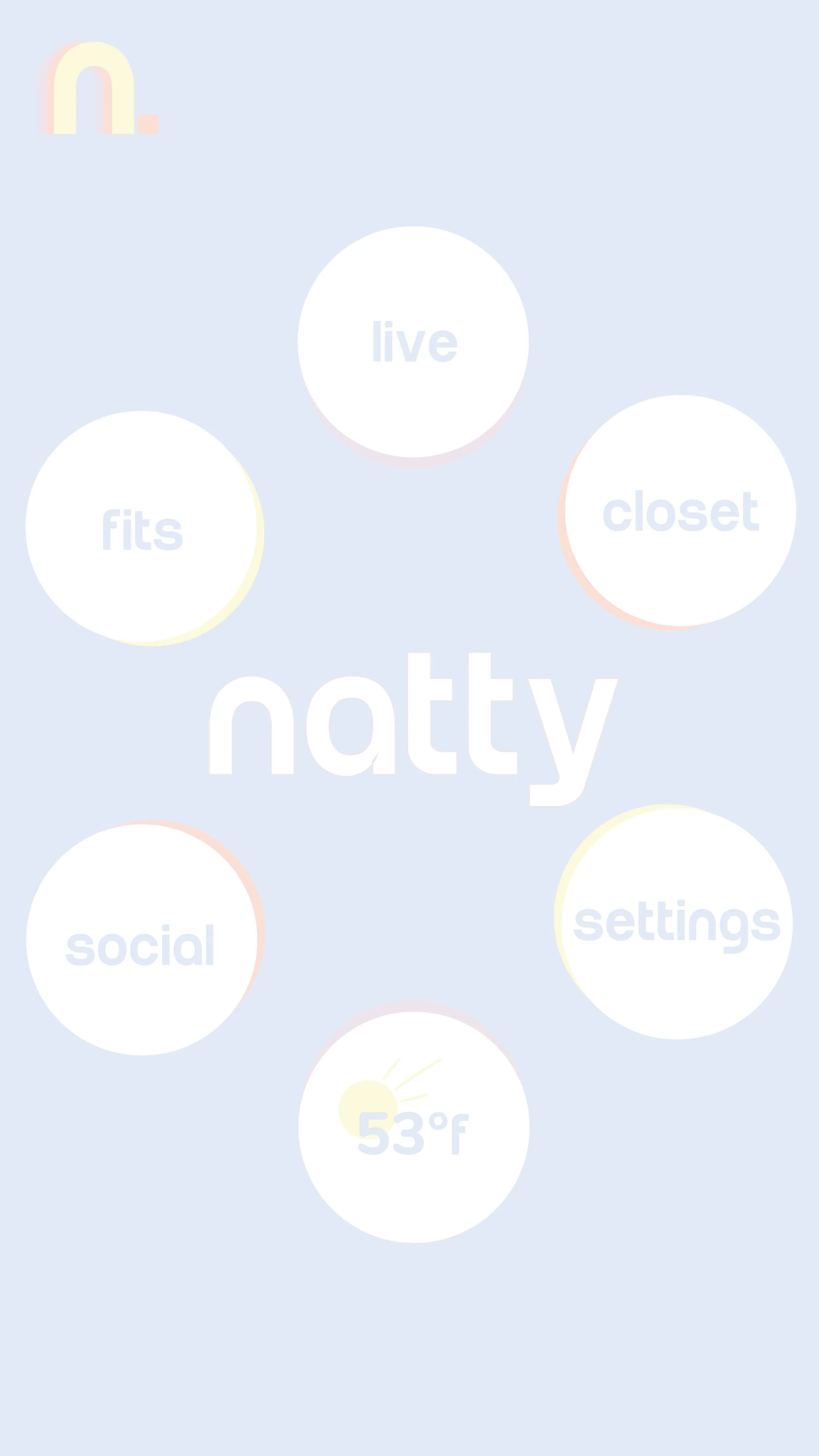
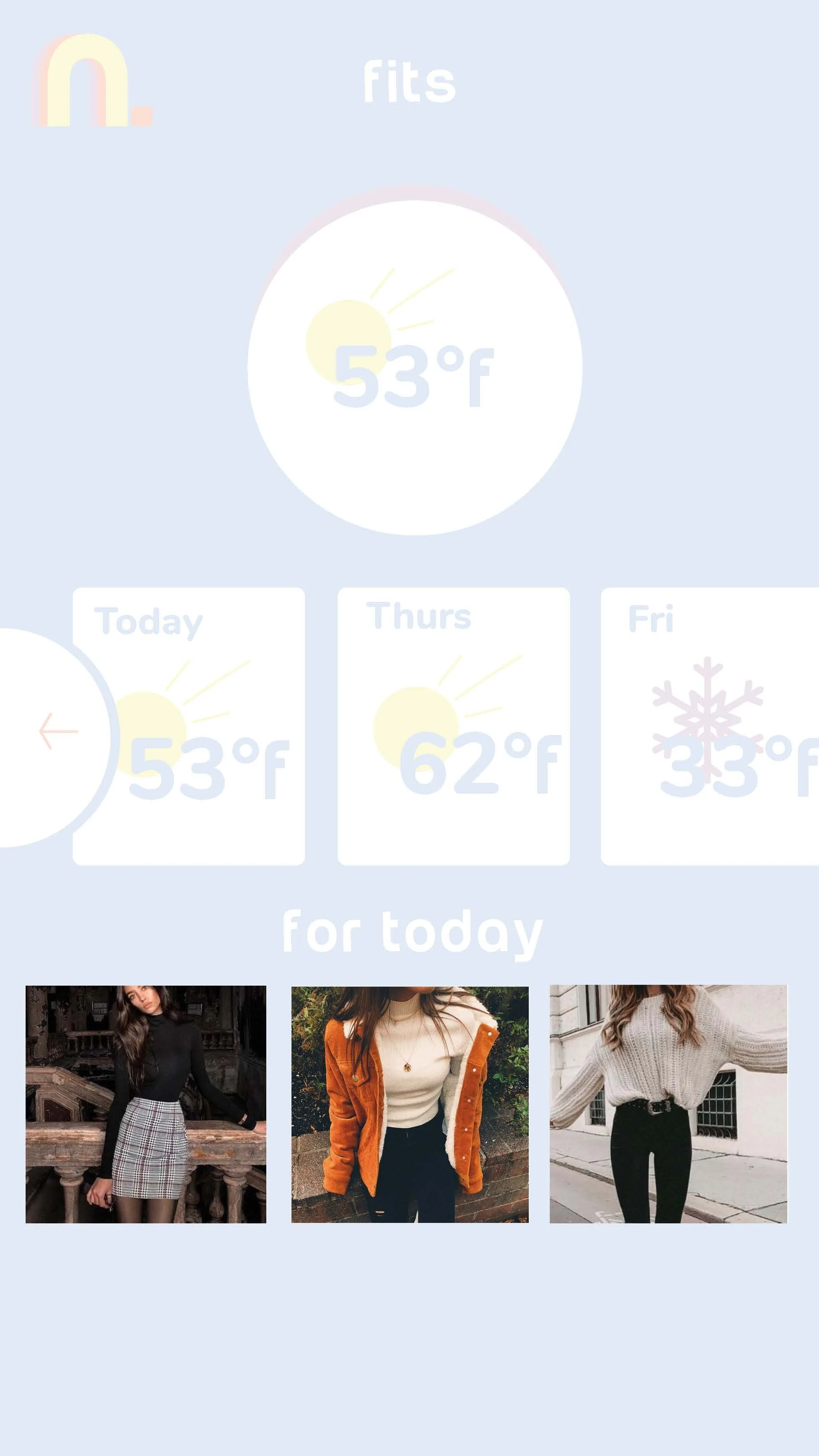

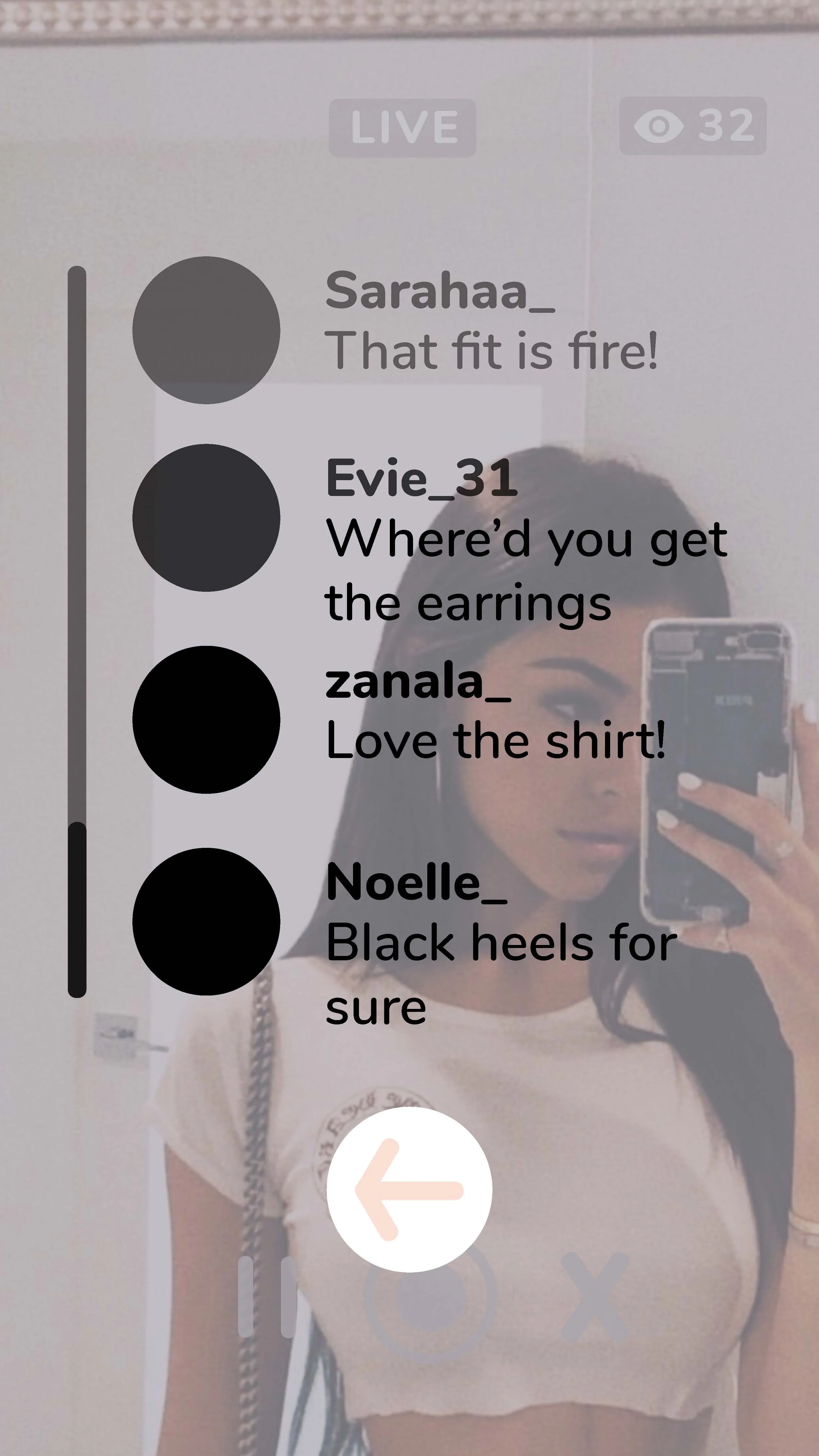
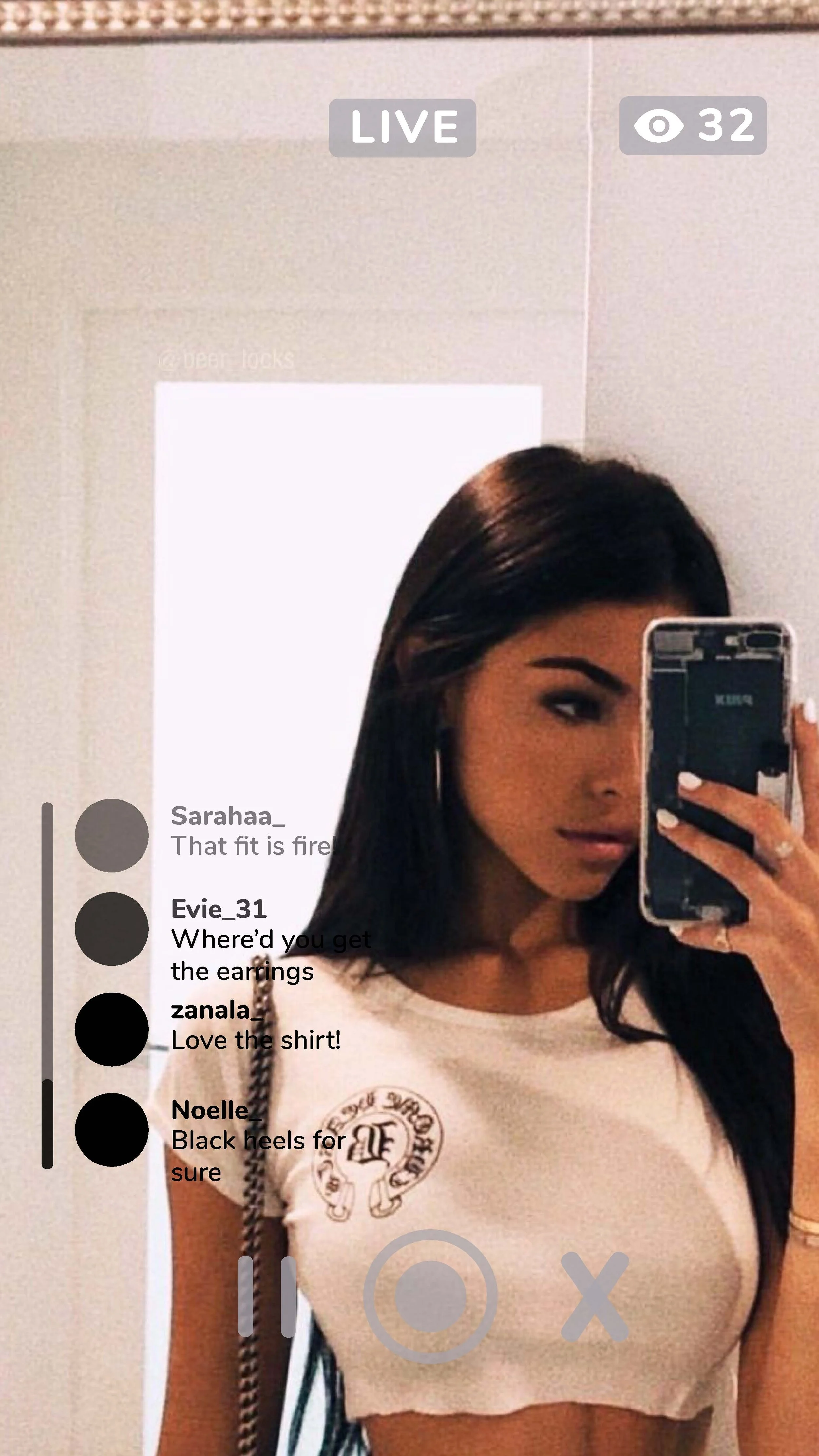
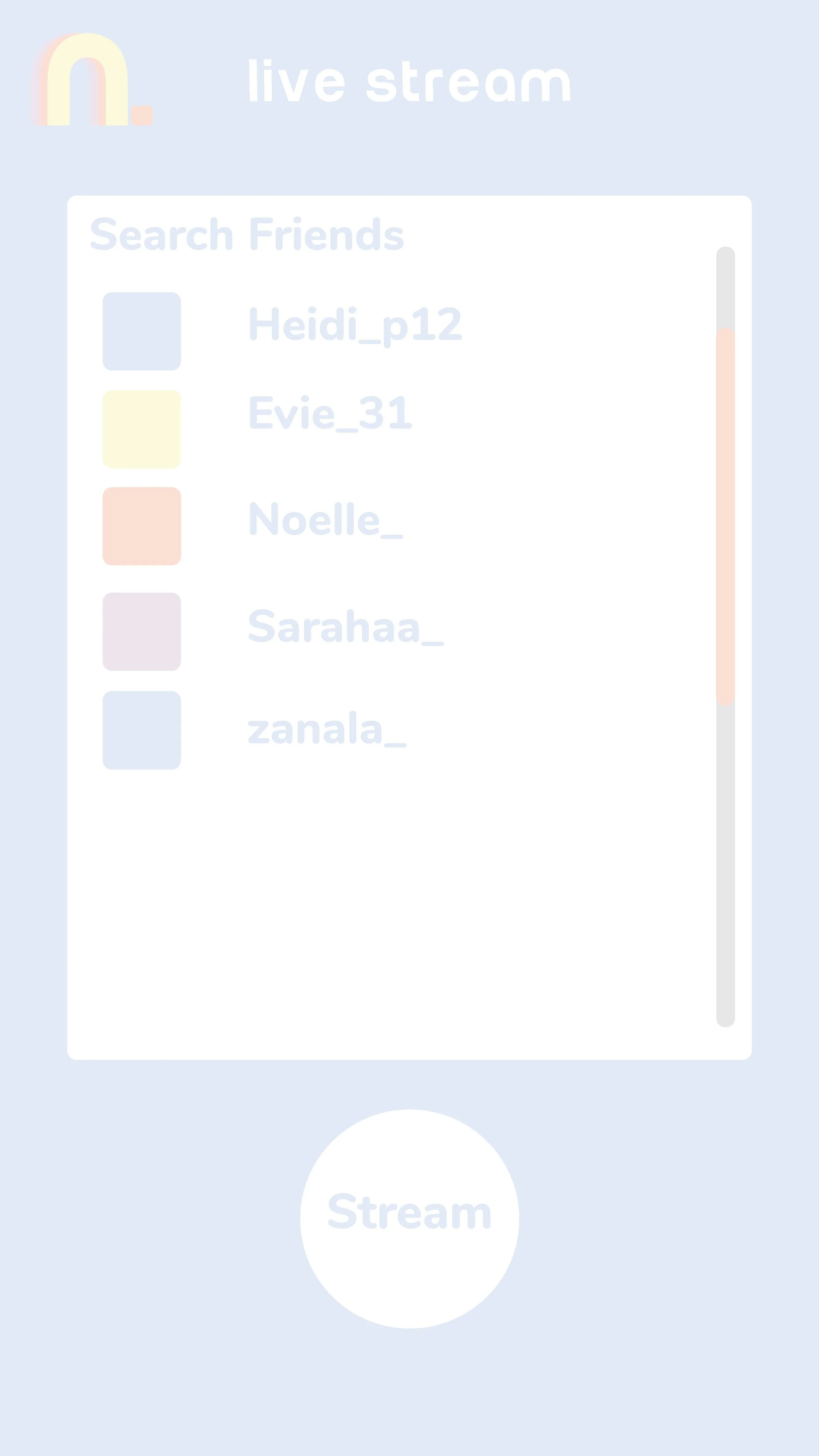
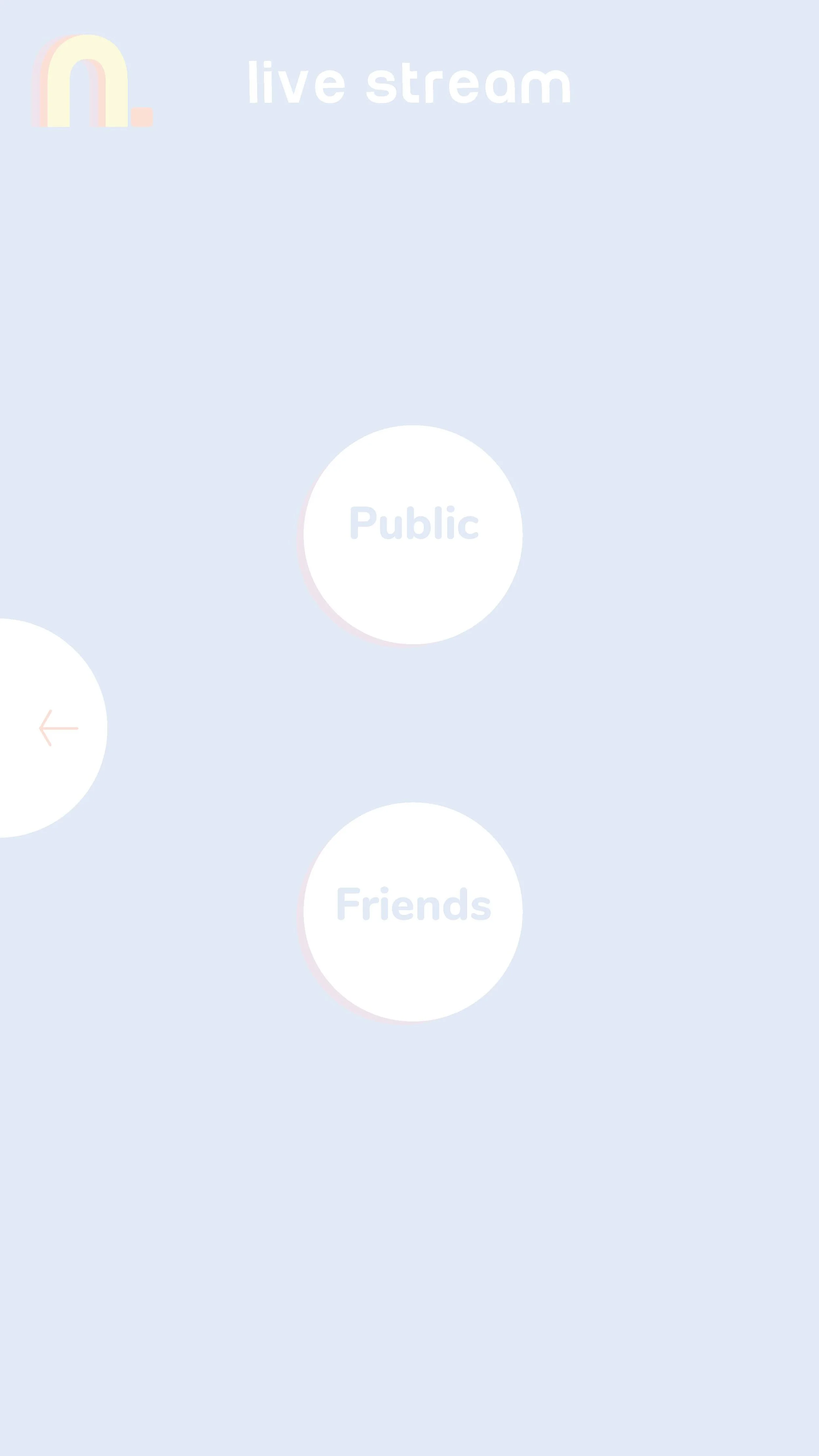
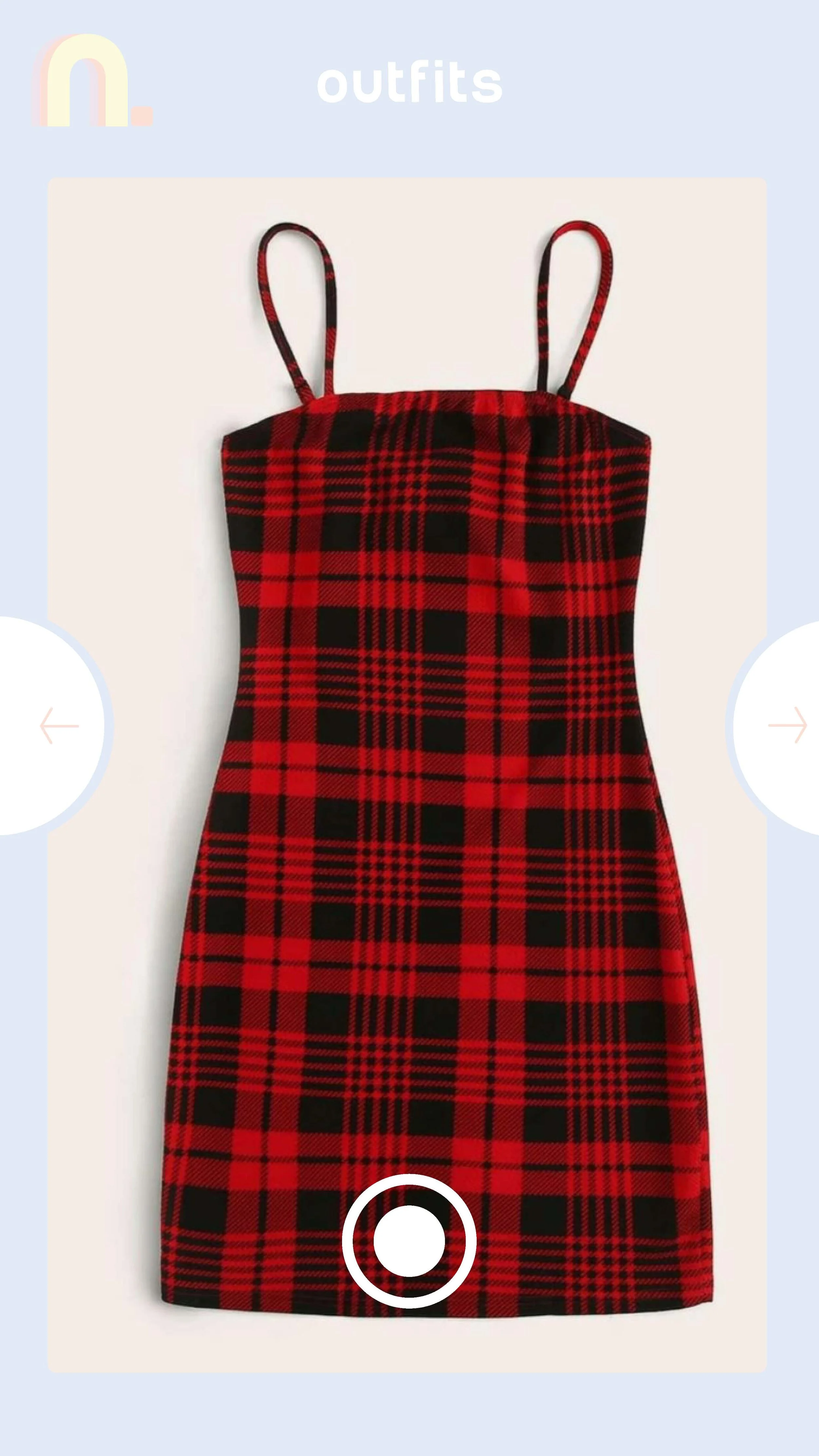
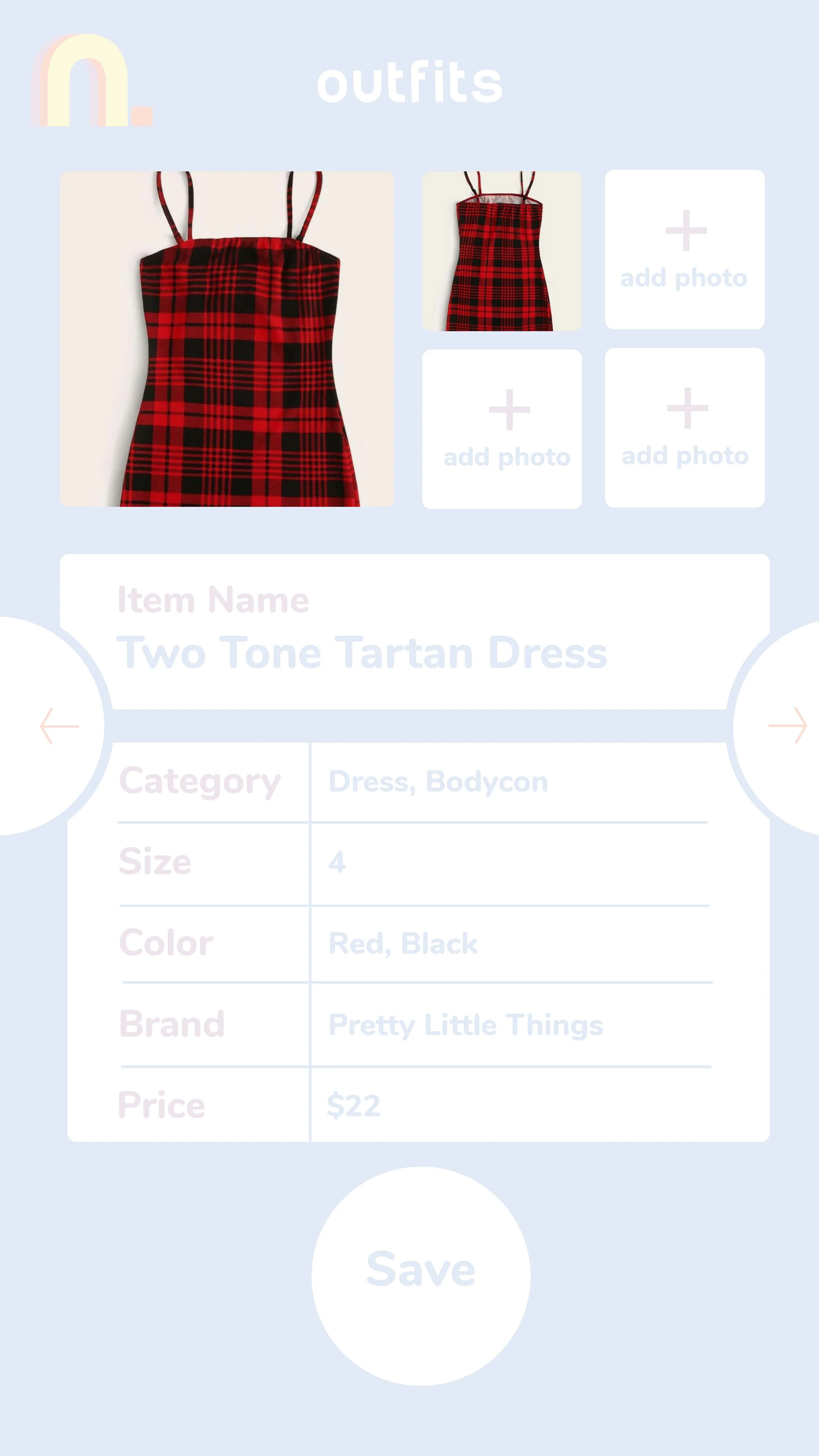
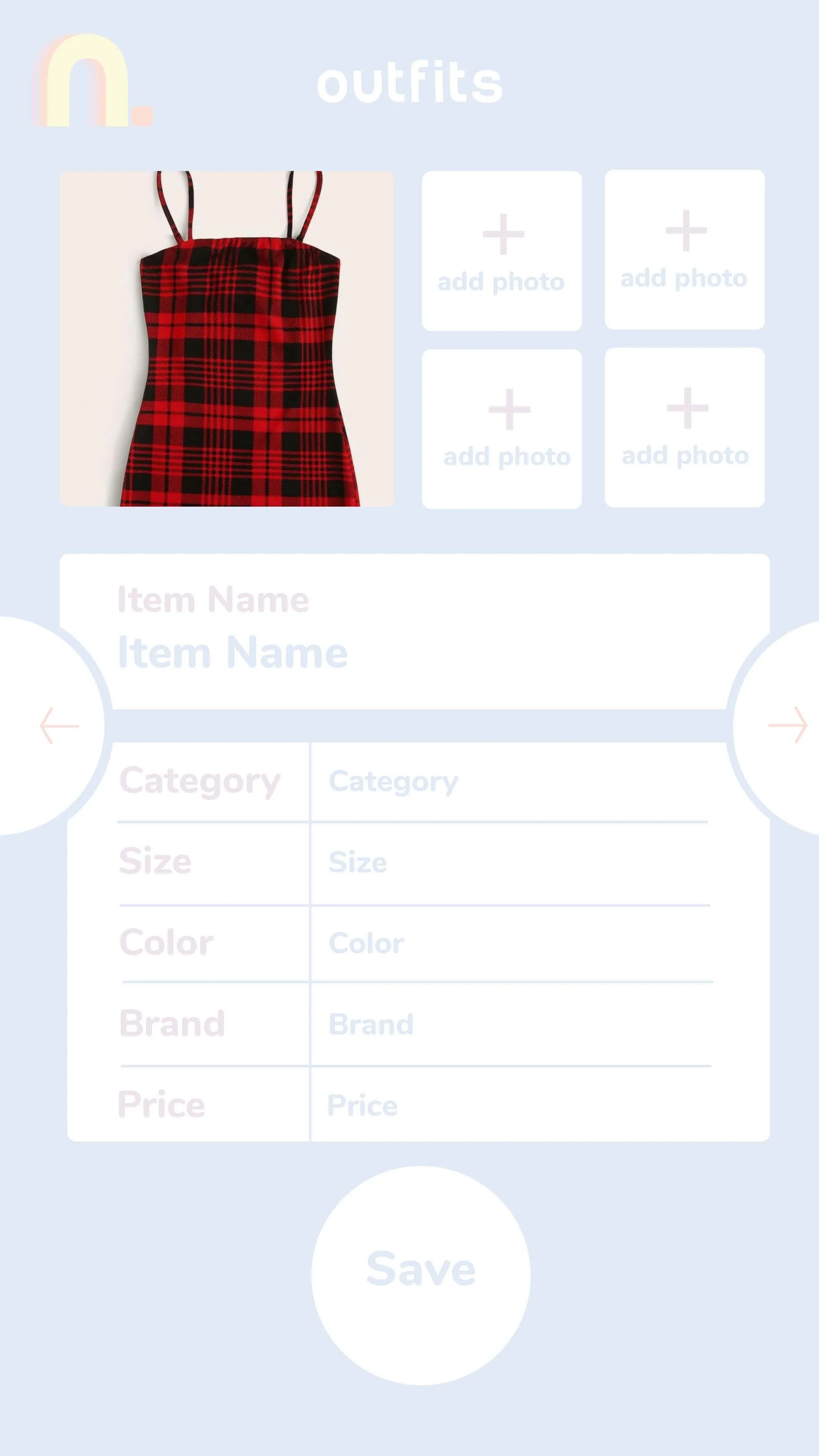
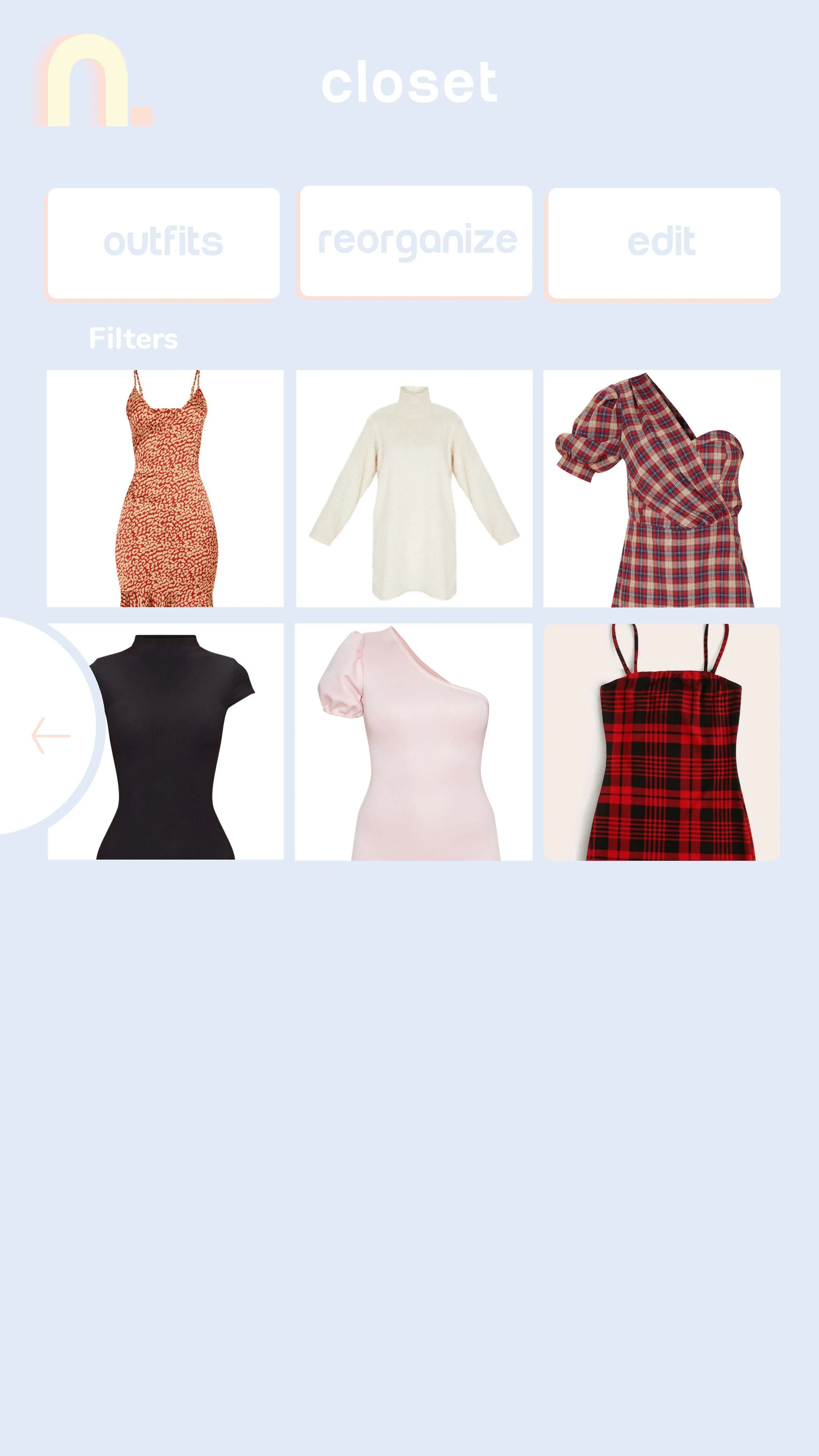
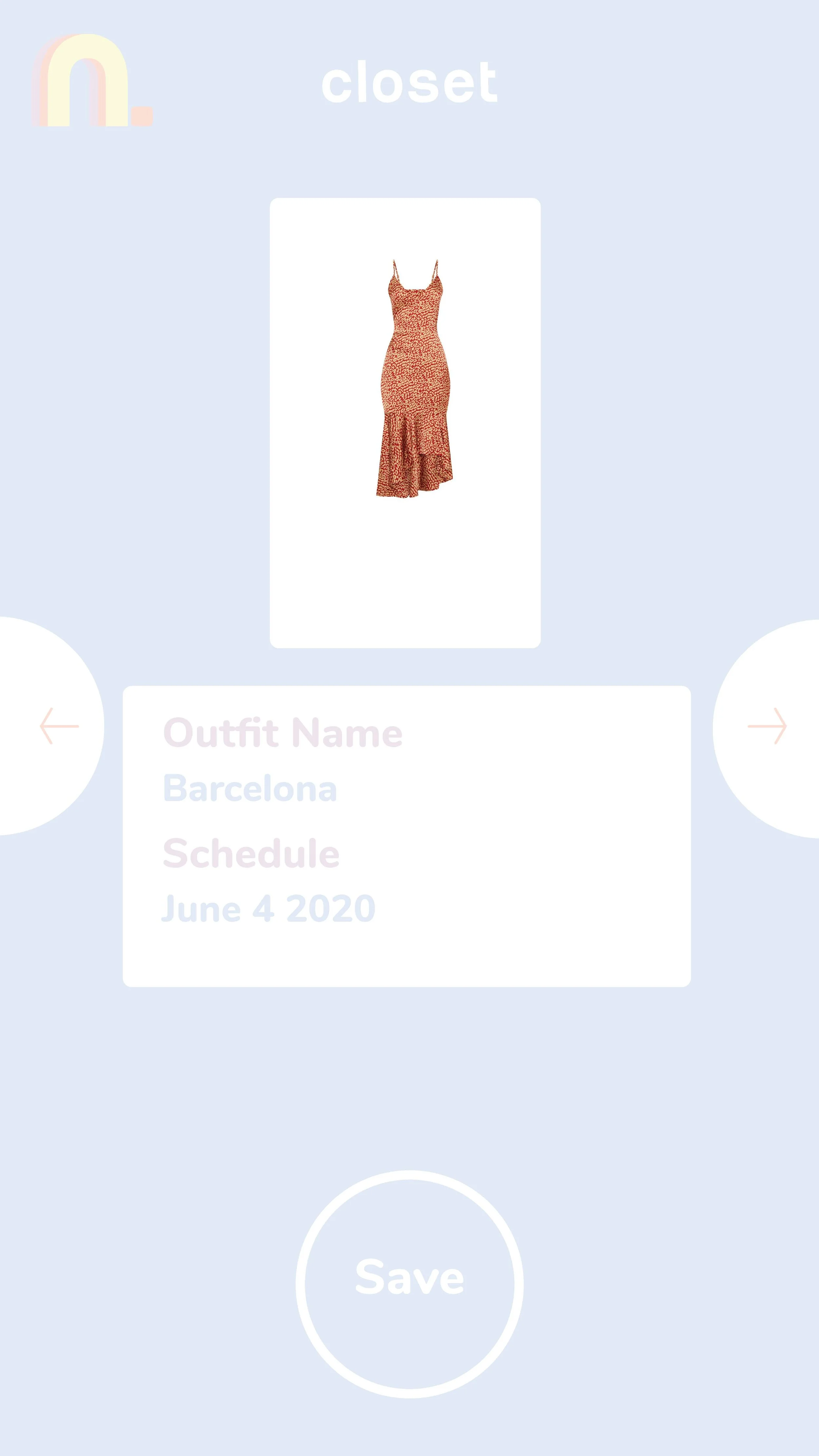
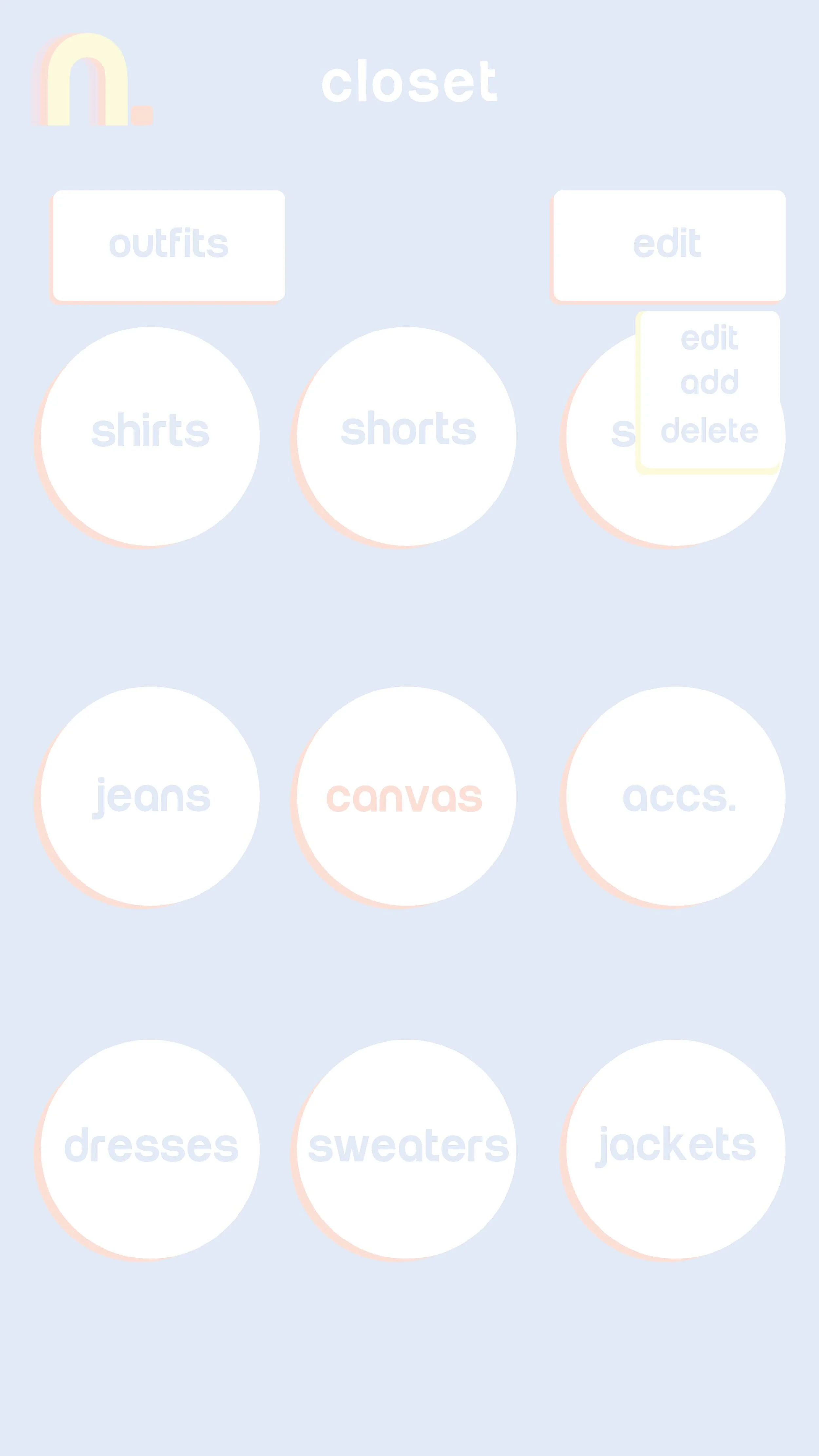
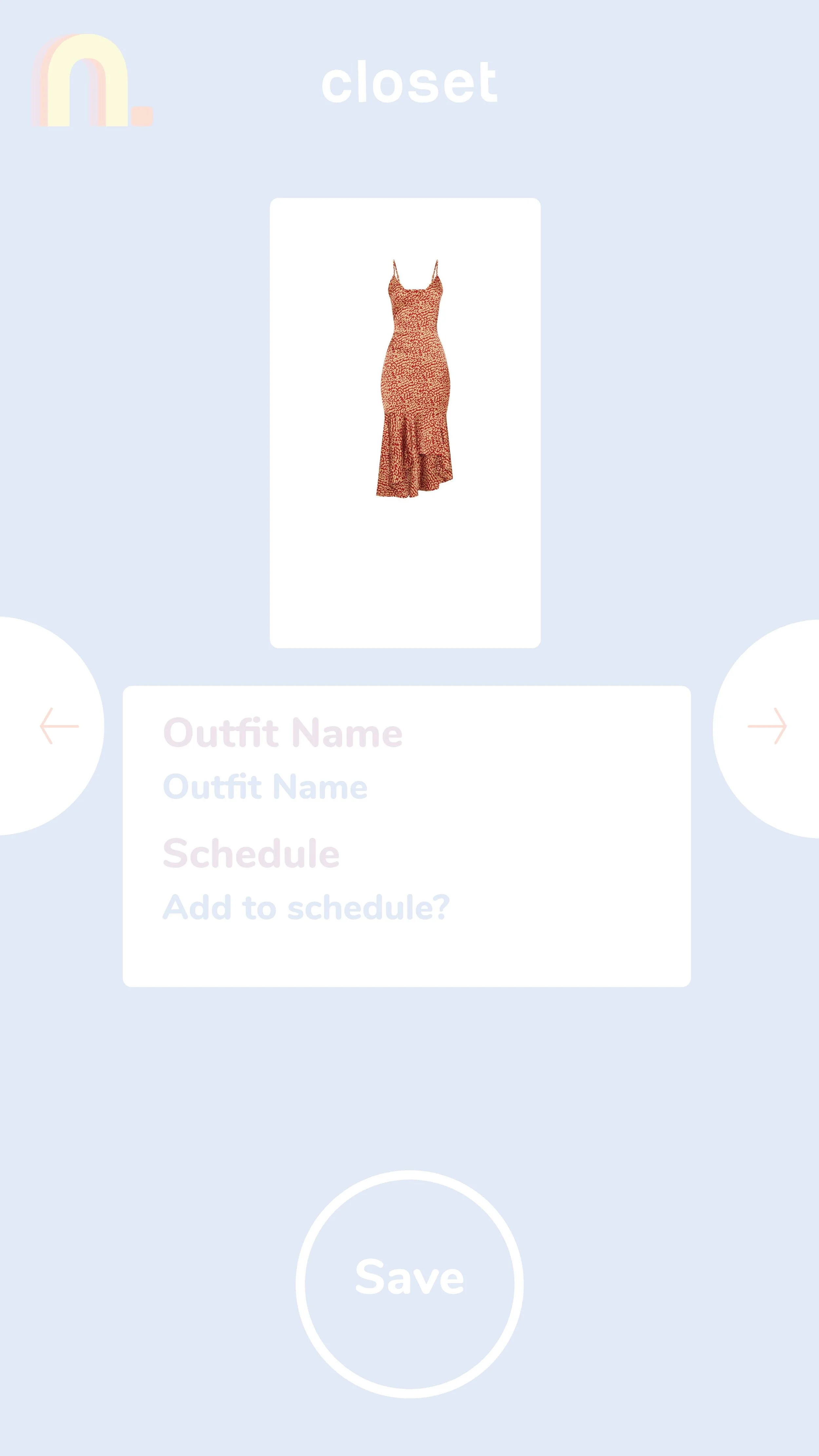
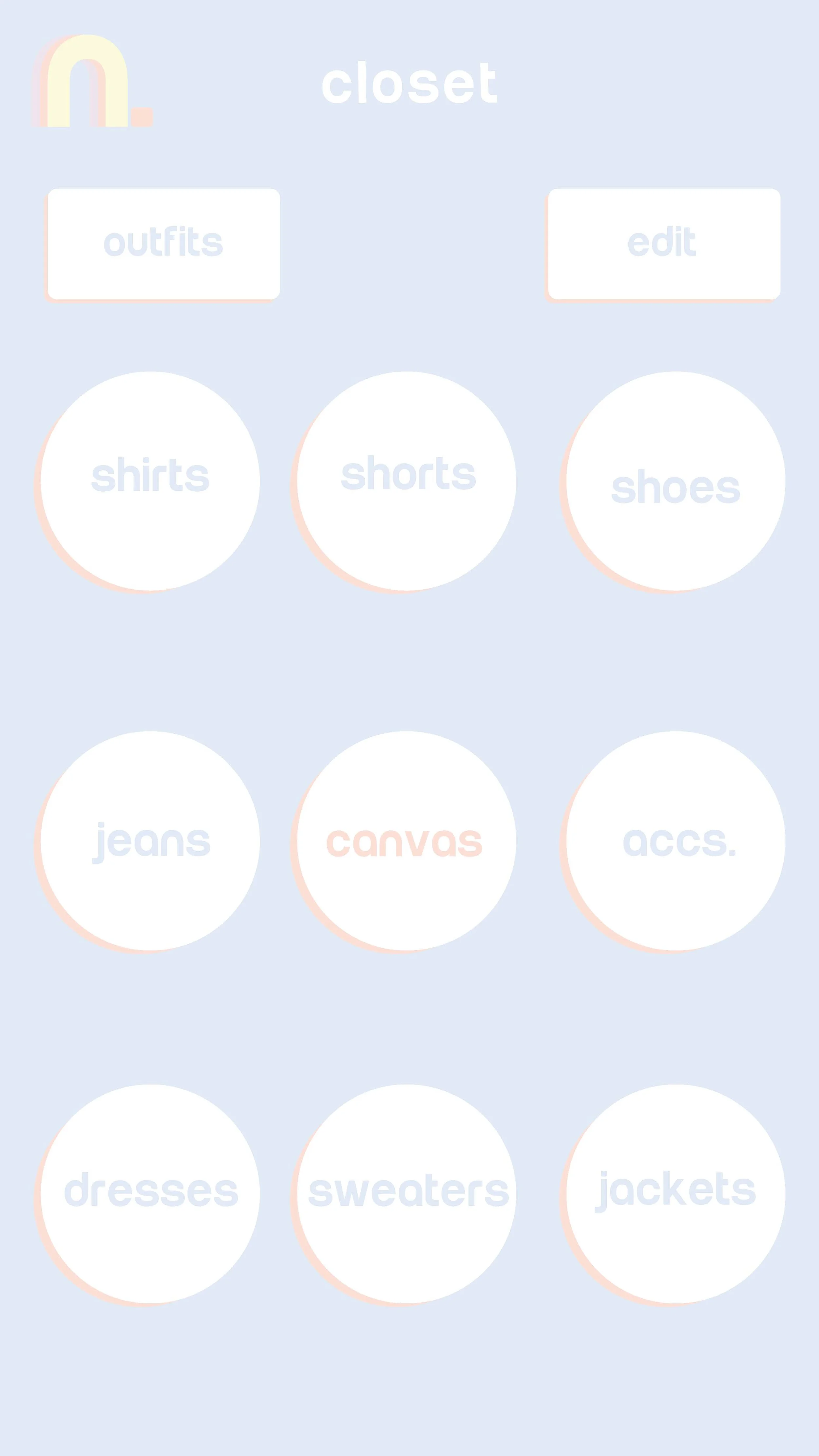
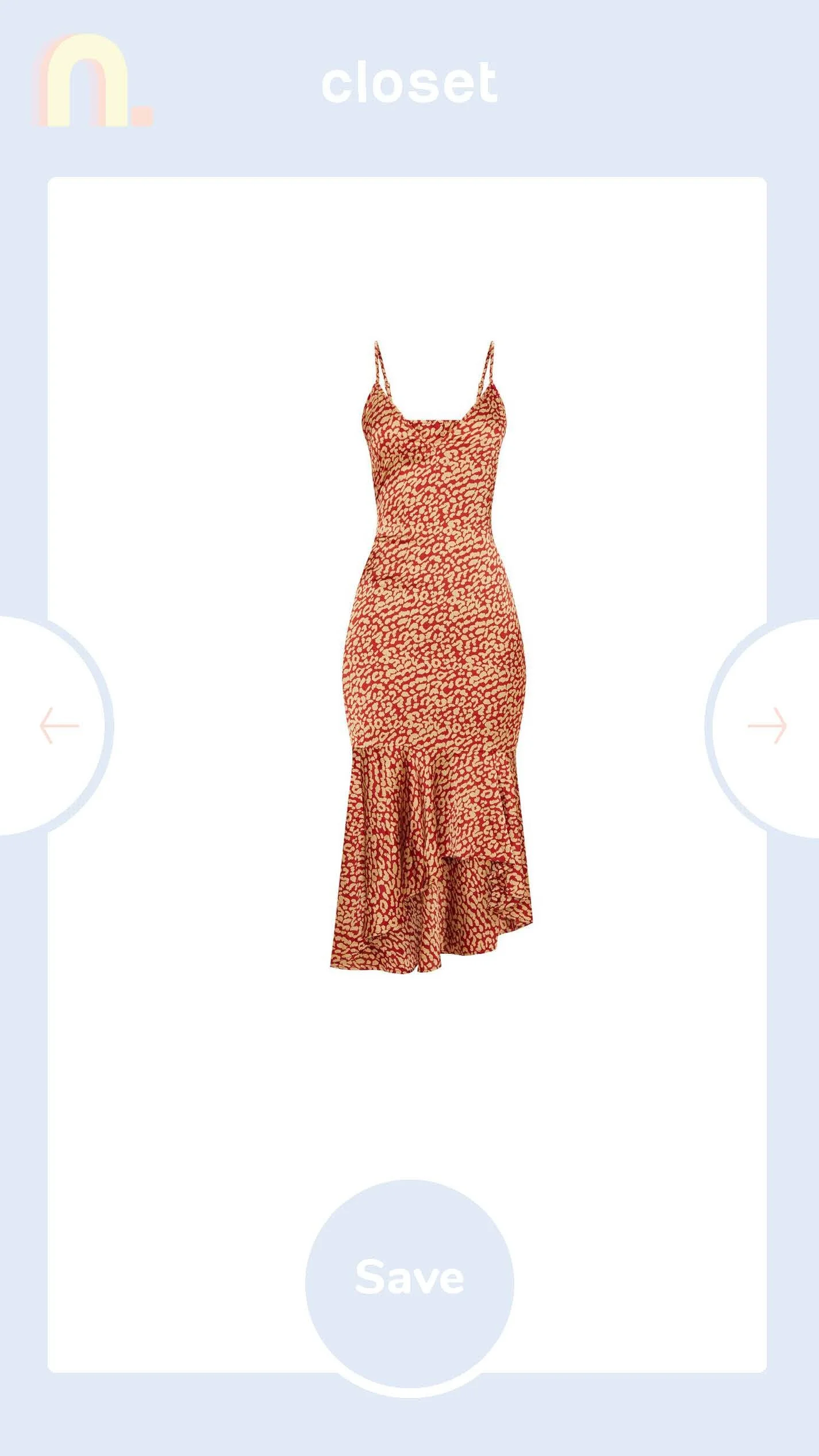
A week of our design sprint was spent creating mobile application screens for the Natty App. Due to the short period of time the team had to create, the prototype focused only on the key features of the application. The overall design of the application is intended to be engaging and welcoming, the overall look and feel of the application being much more fun compared to other more straightforward and plain digital closet applications. The screen designs were intended to be straightforward and intuitive so as to not cause too much confusion to new users.
The task flows our team designed included that of viewing the outfits suggestions by weather feature, starting a live stream and viewing the chat function, adding an item to the closet, and creating an outfit and saving it. The first screen pictured in the carousel above is the homepage, which acts as a menu displaying all of the applications features, (fits leading to the outfit suggestions, live leading to the live streaming, closet leading to the digital closet, social, leading to the social feed of other user profiles, a weather icon displaying the current weather conditions, and the applications settings.
The two screens following the homepage are taken from the outfit suggestions by weather task flow wherein the user is able to view outfit suggestions by occasion, weather or by personal taste. The weather page would show the current weather, the weather for the week, and then outfit suggestions based on pieces in the user’s closet for current weather conditions.
The next three screens are taken from the live streaming task flow wherein the user can start either a public or private live stream with just friends, choose who can view the stream from a friends list, and then stream a shopping or styling session for quick advice and validation. The screens demonstrate how the live streaming function would look in action on the side of the streamer, also demonstrating the ability to enlargen the chat stream for easier viewing.
The next four screens demonstrate the process of adding an item to the users closet. Here, the user can take a picture of any clothing item they own, add details related to the item such as an item name, its color, size, brand and other information. From here, they can save the item and then view it in their closet. The last screen demonstrate the process of creating an outfit, wherein the user can click and drag an item to the canvas, and save the created outfit with a specific name and date.
TRANSLATING SCREENS TO TABLET DESIGNS
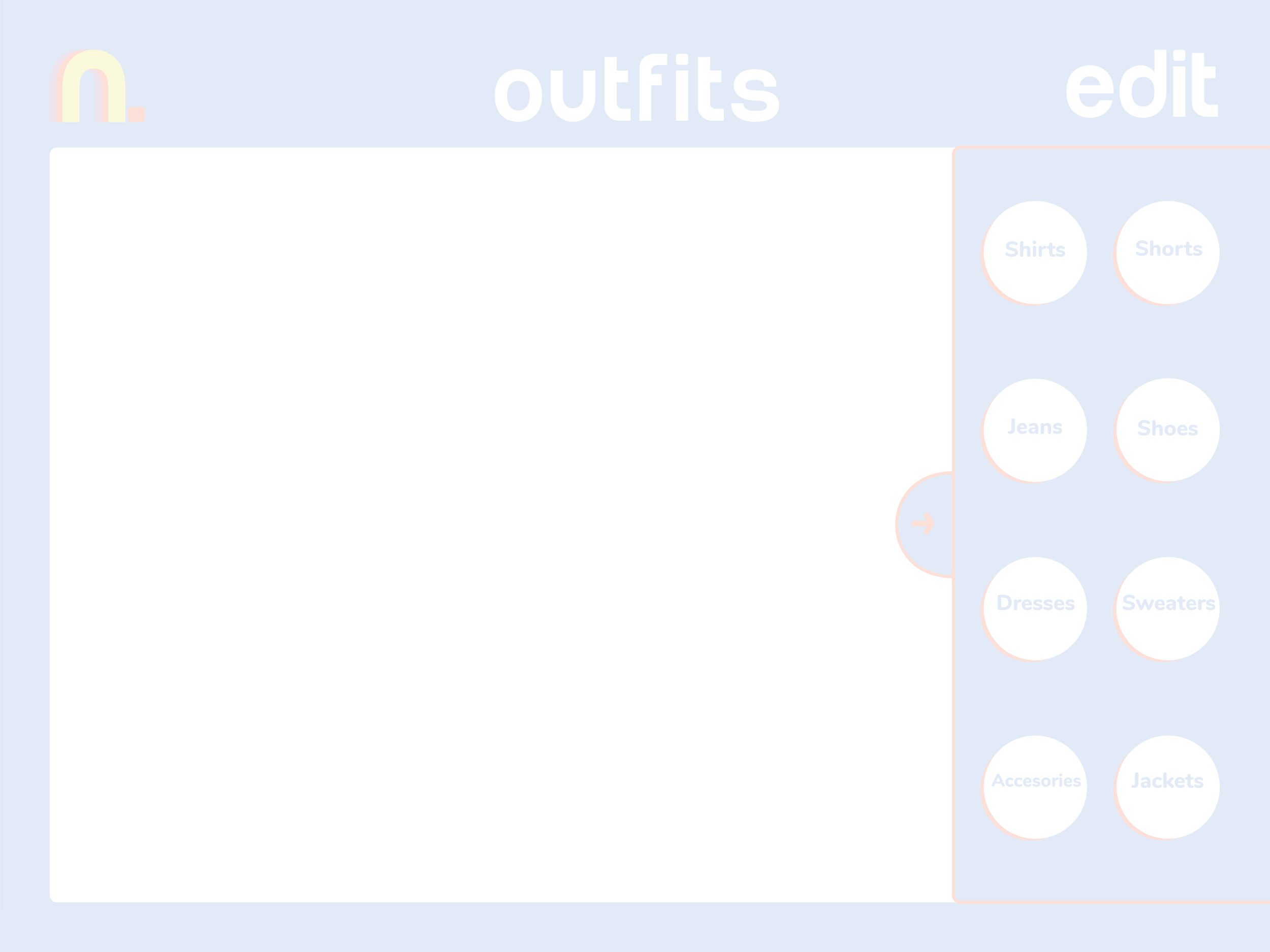
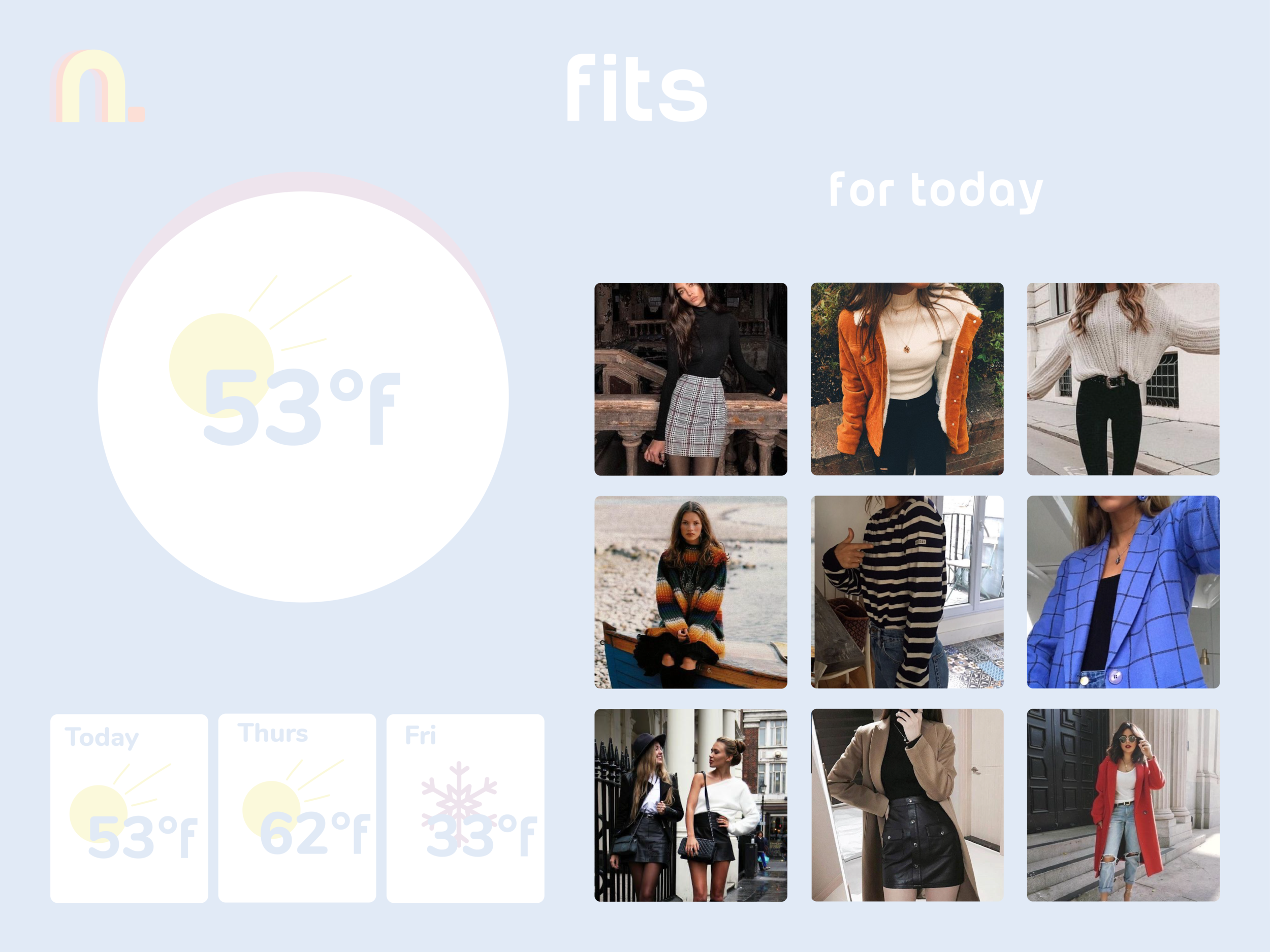
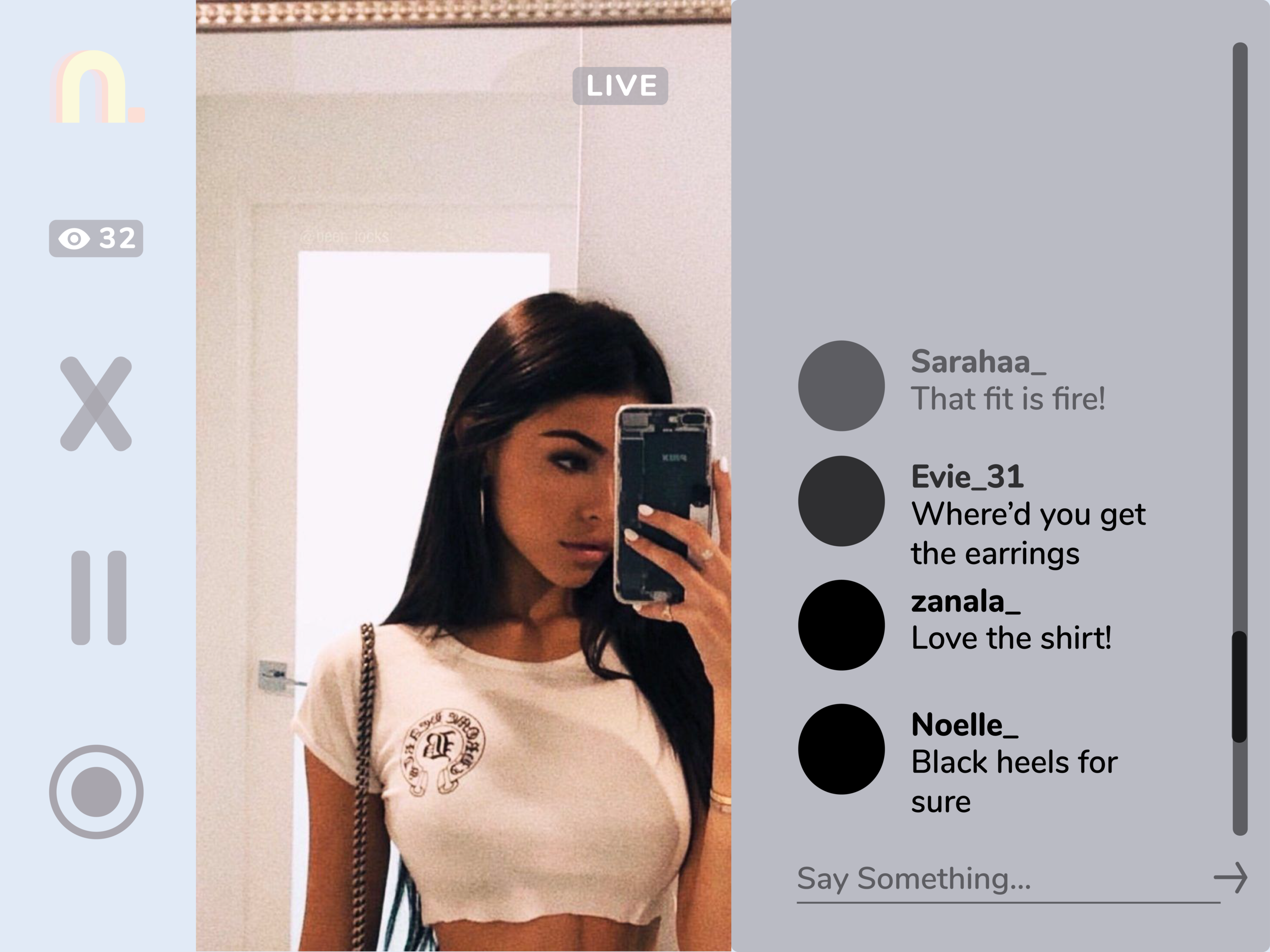
Our next steps were to translate our mobile screens to a tablet format, focusing on effectively utilizing the increased are in which we could place and layout our features. As such, our tablet screens focused on utilizing space effectively so as to emphasize the apps most important and effective features. For example, the live streaming screen splits the space so as to not only view the chat, but get a clear and legible view of the chat so as to easily review commentary from friends. Additionally, the canvas screen allows the user to better layout items without having to toggle back to the closet menu as often.
RETROSPECTIVE
KEY CHALLENGES
Our greatest challenge in approaching this project was in creating a more narrowed project vision, as originally our team’s goal was to create an application that addressed such a wide variety of concerns that the concept as a whole became muddled and difficult to design in a coherent and effective manner. As such, we struggled to focus on a singular unified concept that the app could be centered around so as to create a clear vision and goal for our project design. Eventually, the team was able to regroup, understanding that an app that addressed too many concerns would ultimately end up addressing none of them, and decided to focus solely on collaboration as a central theme, emphasizing the social aspect of fashion for our project concept.
Our project also introduced an entirely new approach to fashion and styling apps, which many users would be completely new to, so one of our most difficult challenges was creating a product and design that would be intuitive enough so as so pose a potential for user to learn how to use the app, rather than being so intimidated by its unfamiliarity that the product as a whole would be unappealing. As such, one of our main challenges was to work on usability and navigation so as to create an app that took from familiar user experiences so as to ease the user into a new experience.
Additionally, our team struggled with time, as this project was completed on a shorter timeline than our previous projects. As such, we found difficulty in striking a balance between making time for actually screen designs and testing our designs. Due to our limited ability to meet in person at times, we ended up placing more emphasis on the testing of our prototype, using our screen designing period to only design what was necessary and what conveyed our concept, resulting in screens that were not as thoughtfully designed, but demonstrated our intentions. While we were able to obtain thorough usability research that was essential in informing our group of what steps would next need to be taken to improve the application and improve upon certain areas of our concept, we also were unable to provide satisfactory screen designs from the start, which would place us behind in our creative process overall.
KEY INSIGHTS
Through the research conducted during this design sprint, our team determines that this product is a viable concept that would cater to a very present need in the fashion community which speaks to the survivability of the product, despite requiring a great deal of work on the overall product design. While the concept of the project and the research surrounding the project are strong, improvements related to the navigability, info organization, and legibility of the application are needed.
From feedback received during project presentations, it is clear that our team needs to emphasize empathy for our target audience and work on inclusivity so as to be accessible to wider audiences. While our application does cater to the needs of a specific audience, we would not want our product to turn away users based on its lack of accessibility and exclusivity. As stated during our project presentations, the overall color palette of our design requires greater contrast so as to be more accessible to individuals that may be visually impaired. As a team, it is essential that our product be accessible to as many individuals as possible, so taking into account the needs of marginalized communities should be a priority for our teams designs in future iterations. Additionally, our designs at present use terminology that is too specific to a certain age range, isolating individuals that are unfamiliar with these terms and making the app as a whole less welcoming. In the future, it is essential that we avoid isolating terminology that serves to exclude potential users, cataring to a wider audience, and emphasizing the core messaging of creating an environment where individuals can learn and grow in their fashion knowledge.